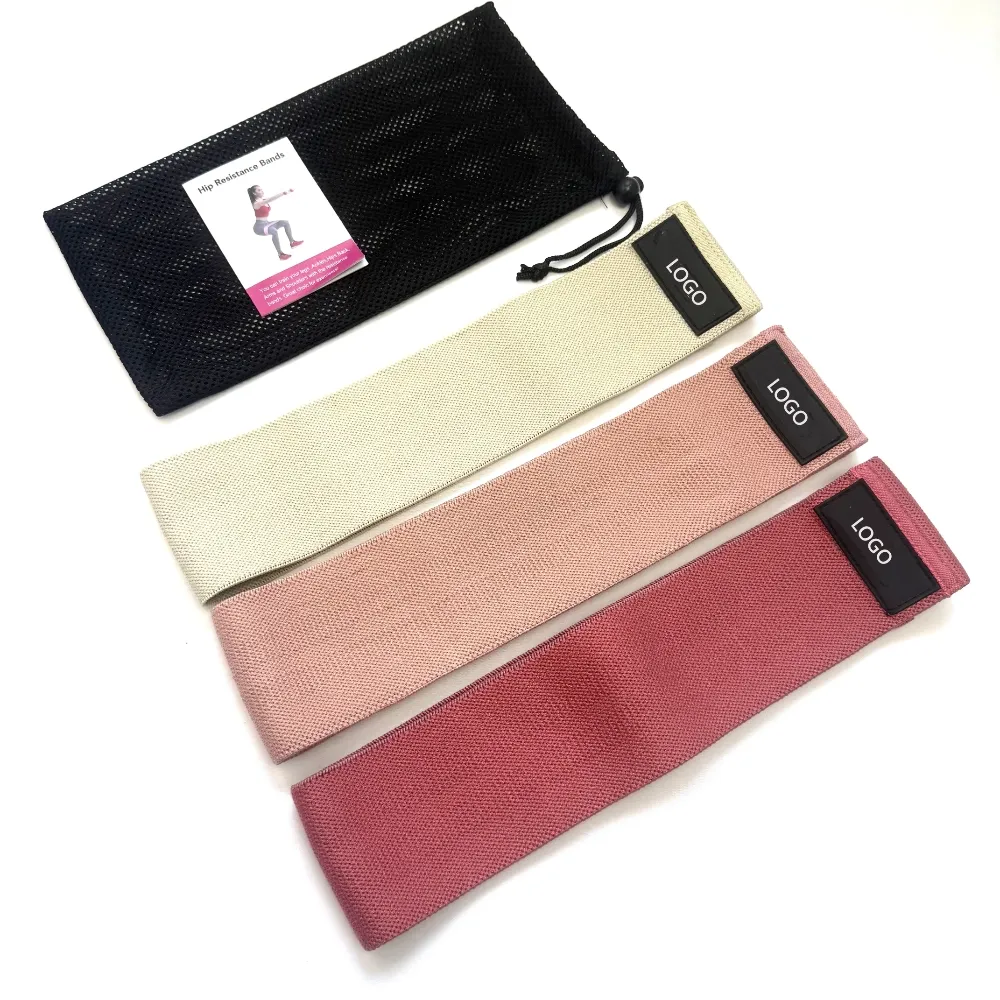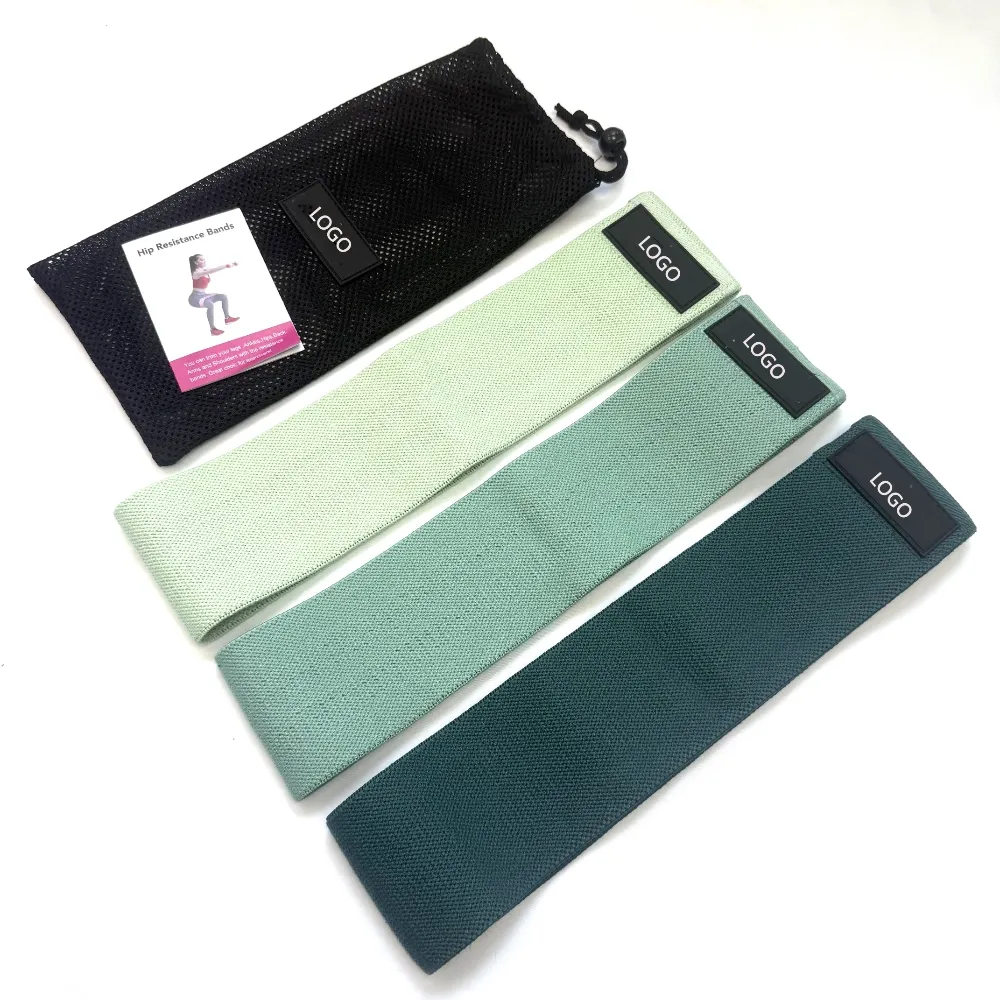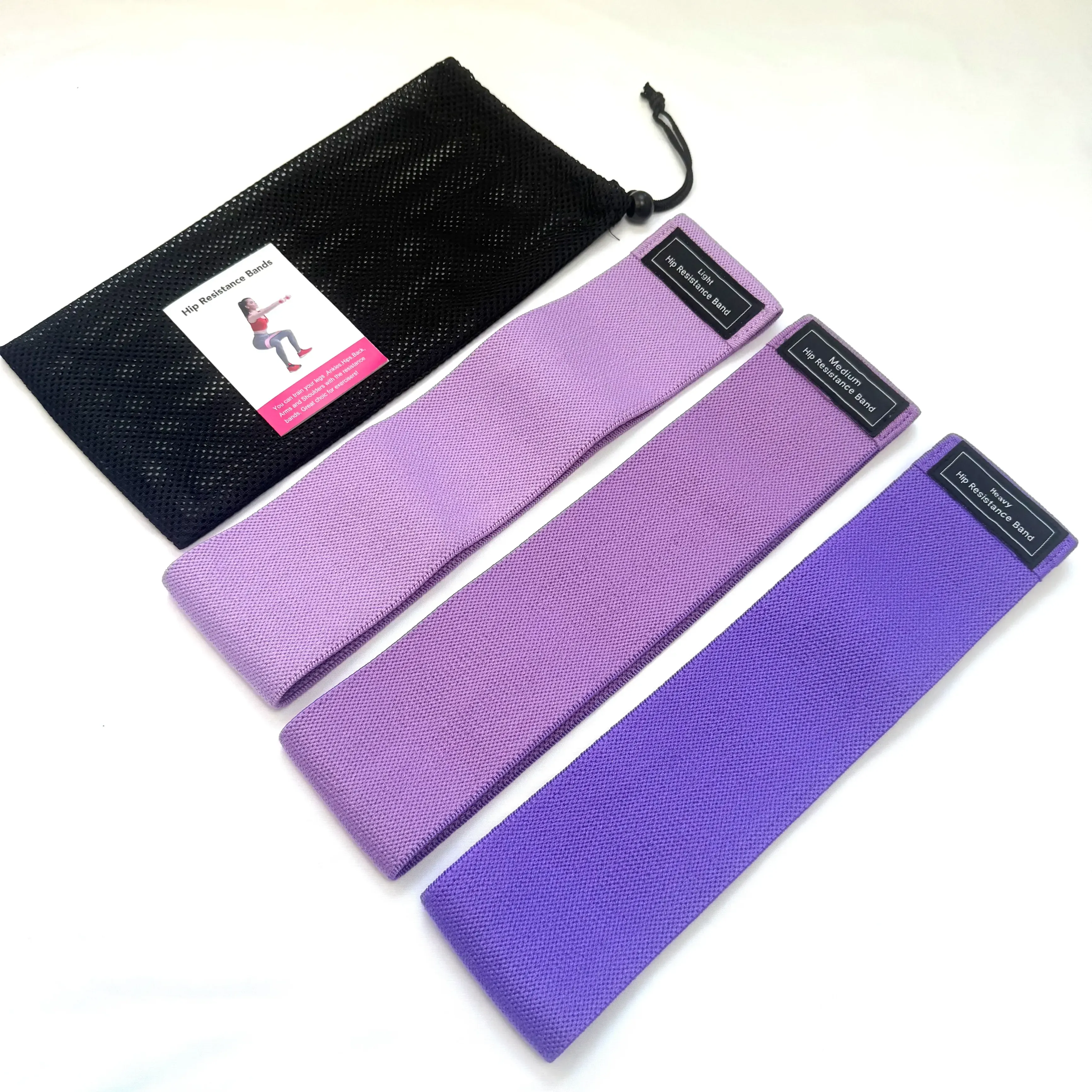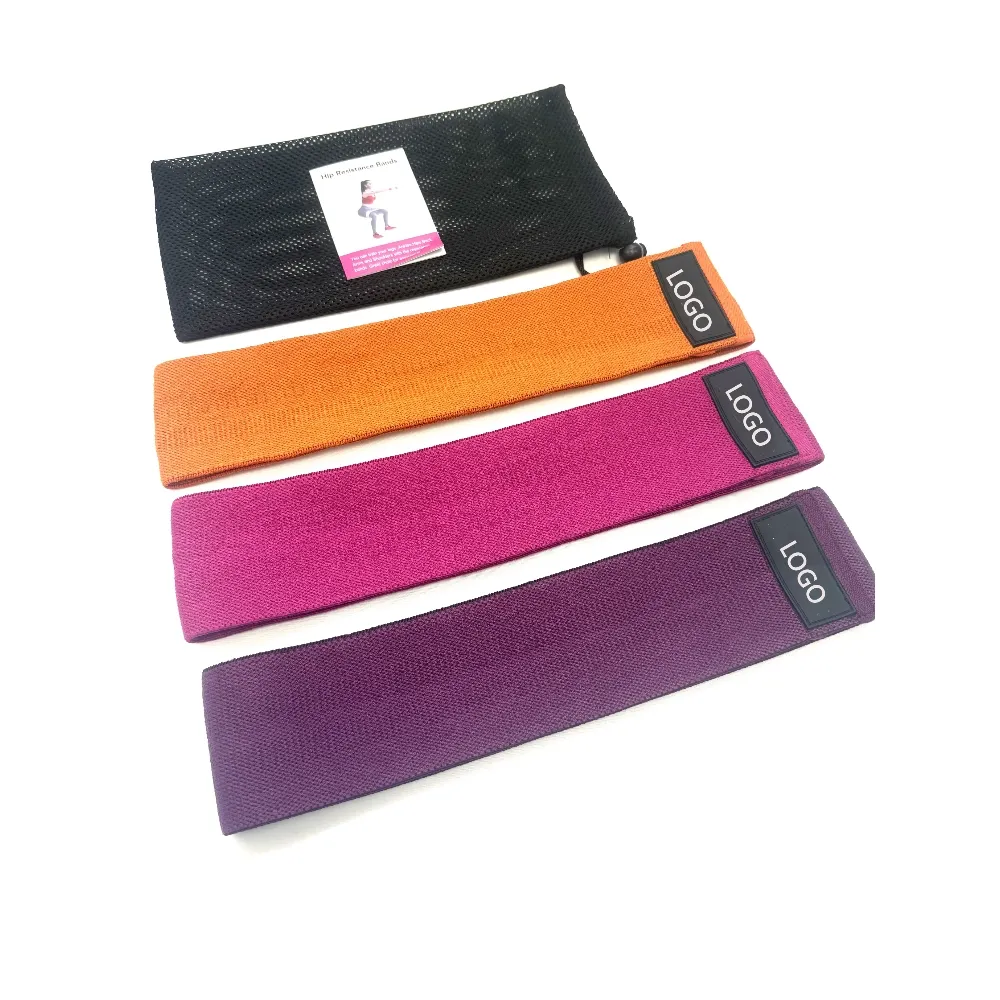
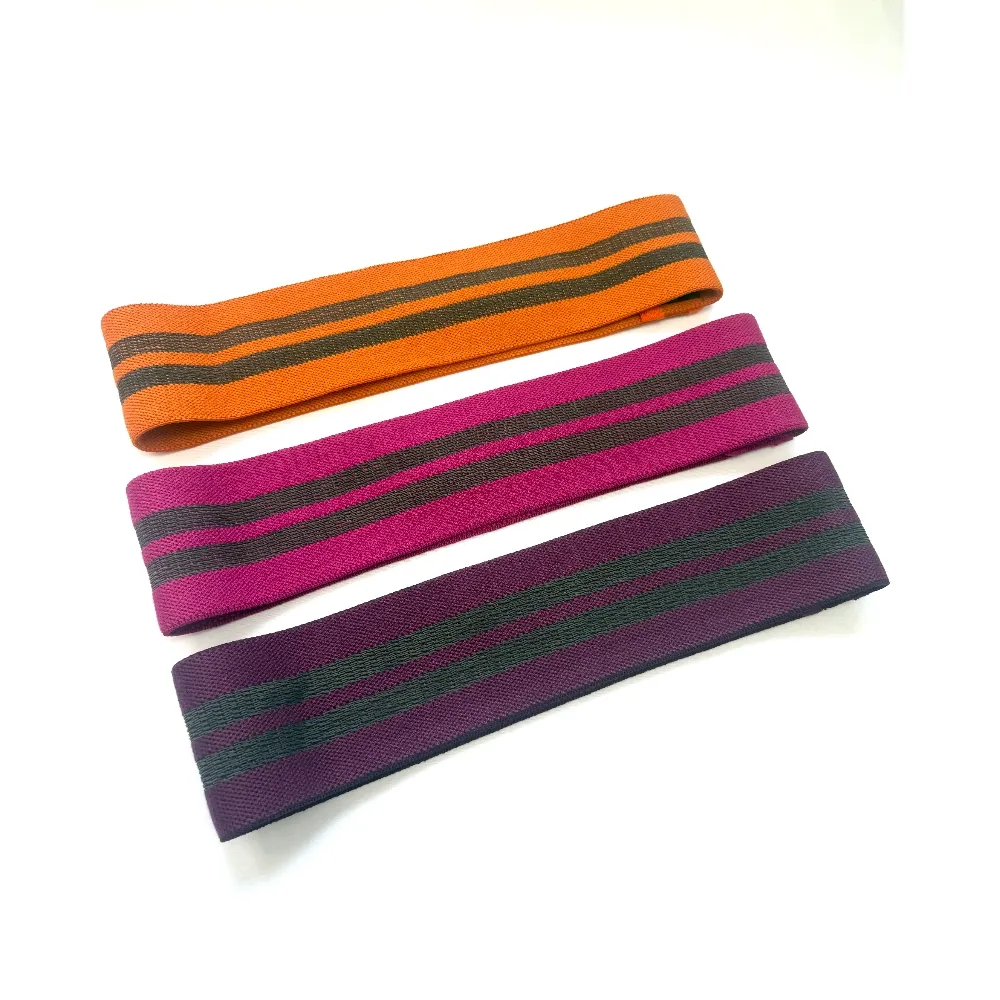
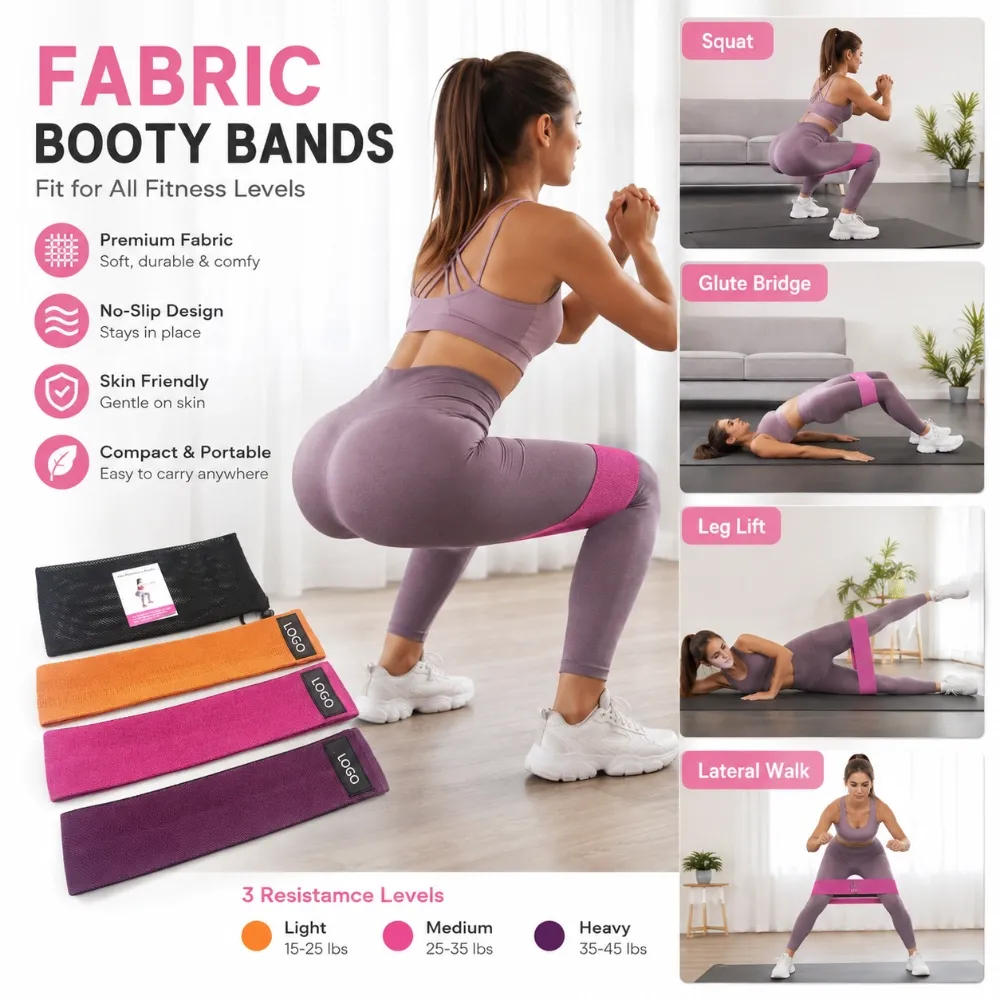
Booty bands
Hip Resistance Bands for Hip Exercises & Strength | OEM
Wholesale hip resistance bands for hip exercises, strength, flexor training and mobility. Custom resistance, colors, logo and packaging from an OEM factory
Hip Resistance Bands for Hip Exercises, Strength & Mobility
Our hip resistance bands are continuous resistance loops designed to add controlled resistance to hip abduction, hip flexion, glute activation and lower-body mobility exercises.
Worn around the thighs, above the knees or around the lower legs depending on the exercise, these bands provide progressive resistance as the legs move apart. This makes them a simple and portable training tool for strengthening the muscles surrounding the hips and improving lower-body training variety.
As an OEM resistance band manufacturer, we produce resistance bands for hip exercises for fitness brands, gyms, sports equipment distributors and private-label programs, with customizable resistance, dimensions, colors, logos and retail packaging.
Why Use Resistance Bands for Hip Training?
The hip joint is involved in many everyday and athletic movements, including walking, running, squatting, climbing, lateral movement and changing direction.
Resistance bands make it possible to train several movement patterns around the hip without requiring large exercise equipment.
Hip Abduction
Hip abduction involves moving the leg away from the body's midline.
Placing a loop around the thighs or lower legs adds resistance to this outward movement and can increase demand on muscles including the gluteus medius and gluteus minimus.
Hip Flexion
Hip flexion occurs when the thigh moves toward the torso.
Resistance bands for hip flexors can be incorporated into standing knee-drive and other controlled hip-flexion exercises.
Glute Activation
Hip bands are commonly used before squats, deadlifts and lower-body sessions to add resistance to movements involving the glutes and hip stabilizers.
Lateral Movement
Lateral band walks and similar exercises create resistance during side-to-side movement, making them useful in general strength, warm-up and athletic training programs.
Hip Resistance Bands Specifications
Specification | Available Options |
|---|---|
Product Type | Hip Resistance Bands / Resistance Loop Bands |
Material | Natural latex or customized material options |
Construction | loop |
Length / Circumference | Customized by application |
Width | Standard or customized/ 3inch |
Thickness | Customized according to resistance |
Resistance | Light / Medium / Heavy / Extra Heavy |
Color | Standard colors / Custom Pantone |
Logo | Screen printing / customized branding |
Set | Single / 3-piece / 5-piece / custom |
Packaging | Polybag / pouch / color box / hang card |
Private Label | Available |
OEM / ODM | Available |
Resistance note: Final resistance depends on the band's dimensions, material thickness and extension distance. Resistance specifications should therefore be confirmed against the buyer's testing method before mass production.
Resistance Bands for Hip Exercises
Rather than treating hip bands as a general-purpose fitness accessory, they can be selected according to the specific movement pattern being trained.
Here are several common hip resistance bands exercises.
Banded Hip Abduction
Place the loop above the knees and move the knees outward while maintaining a stable torso.
Primary training area:
Hip abductors, gluteus medius and gluteus minimus.
Common applications:
Lower-body activation, strength training and warm-up routines.
Banded Hip Flexion
Anchor the band appropriately and perform a controlled knee drive or hip-flexion movement against resistance.
Primary training area:
Hip flexors and muscles involved in lifting the thigh.
Common applications:
Sports warm-ups, general hip strengthening and lower-body conditioning.
Banded Glute Bridge
Position the band above the knees and maintain outward pressure while raising the hips.
Primary training area:
Gluteus maximus, gluteus medius and posterior chain.
This combines hip extension with resisted hip abduction.
4. Lateral Band Walk
Place the band above the knees or around the lower legs and step sideways while keeping continuous tension.
Primary training area:
Glutes, hip abductors and lateral hip stabilizers.
5. Banded Squat
Place the loop above the knees and maintain controlled outward tension throughout the squat.
Primary training area:
Glutes, quadriceps and hip stabilizers.
6. Standing Hip Extension
Move one leg backward against resistance while keeping the torso controlled.
Primary training area:
Gluteus maximus and other muscles involved in hip extension.
Resistance Bands for Hip Strength
Using resistance bands for hip strength allows users to progressively increase training difficulty without adding bulky equipment.
For fitness brands, we generally recommend creating clearly separated resistance levels rather than offering multiple bands with very similar tension.
A typical product line can be organized as:
Light — mobility, activation and beginner training
Medium — regular hip and glute workouts
Heavy — strength-focused lower-body training
Extra Heavy — advanced resistance exercises
Users can progress by increasing repetitions, increasing band tension, changing band placement or moving to a stronger resistance level.
For OEM buyers, the exact resistance range can be developed according to your target users rather than using one universal resistance specification.
Resistance Bands for Hip Flexors
Resistance bands for hip flexors are useful when the exercise requires controlled resistance during knee-drive or hip-flexion movements.
Depending on the band style and setup, they can be incorporated into:
- Standing knee drives
- Resisted marching
- Athletic warm-ups
- Controlled hip-flexion drills
- Lower-body mobility routines
For applications requiring a fixed anchor point or independent resistance for each leg, an ankle-strap or tube-style resistance system may be more appropriate than a standard mini loop.
This distinction is useful for buyers developing a specialized hip-training product line.
How to Choose Hip Resistance Band Levels
The best resistance is not simply the strongest band available.
For mobility and activation exercises, users generally need enough tension to feel resistance while maintaining controlled movement.
For strength-focused exercises, a stronger resistance can be selected once the user can complete the intended range of motion without compensating through the knees, lower back or torso.
For retail sets, a simple progression such as:
Light → Medium → Heavy
is easy for customers to understand and also works well for private-label packaging.
For broader training collections, 4- or 5-level sets can provide smaller progression steps.
Hip Bands vs Fabric Booty Bands
Although both products can be used around the thighs, they serve slightly different product-positioning needs.
Feature | Latex Hip Resistance Bands | Fabric Booty Bands |
|---|---|---|
Main Positioning | Hip training & activation | Glute-focused training |
Material | Natural latex | Woven elastic fabric |
Thickness | Thin & compact | Wider & thicker |
Portability | Excellent | Excellent |
Resistance Range | Highly customizable | Usually Light–Heavy |
Hip Flexion Exercises | Suitable depending on setup | Less versatile |
Glute Exercises | Yes | Yes |
Surface Feel | Smooth latex | Soft woven fabric |
OEM Colors | Available | Available |
For brands focused on hip mobility, activation and multi-purpose resistance training, latex loops provide a compact option.
For customers prioritizing comfort and reduced rolling during glute-focused workouts, fabric booty bands may be more appropriate.
Applications of Hip Resistance Bands
Strength & Conditioning
Suitable for warm-ups, lower-body accessory exercises, lateral movement and hip-strengthening programs.
Running & Sports Training
Can be incorporated into activation drills before running, field sports and other activities involving acceleration and lateral movement.
Home Fitness
Compact loops allow users to perform hip and lower-body exercises without large gym equipment.
Pilates & Mobility Training
Light resistance levels can be incorporated into controlled mobility and lower-body exercise programs.
Professional Exercise Programs
Low-resistance bands are also commonly incorporated into professionally supervised exercise programs where controlled, progressive resistance is required.
Manufacturing Process
For OEM buyers, consistent dimensions and resistance are more important than simply producing a band in the requested color.
Our production process for latex hip bands typically includes:
Natural Latex Preparation → Material Mixing → Molding/Forming → Vulcanization → Demolding → Surface Cleaning → Cutting → Logo Printing → Resistance Testing → Visual Inspection → Packaging → Shipment Inspection
Production specifications are confirmed against approved samples before bulk manufacturing.
Quality Control for Hip Resistance Bands
Resistance Consistency
Bands are checked against the approved resistance specification to help maintain consistency between production batches.
Thickness and Dimension Inspection
Thickness, width and loop dimensions are measured according to the confirmed product specification.
Stretch & Recovery Testing
Samples are repeatedly stretched to evaluate elasticity, recovery and durability.
Surface Inspection
Each production batch is inspected for visible defects, abnormal surfaces, cuts or other issues that could affect product performance.
Logo & Packaging Inspection
Logo position, resistance markings, colors, set combinations, barcodes and customized packaging are checked before shipment.
OEM Hip Resistance Bands Manufacturer
We manufacture customized hip resistance bands for:
Fitness Brands — Private-label resistance band collections.
Gyms & Training Studios — Multi-level bands for warm-up and strength programs.
Sports Equipment Distributors — Standard and customized wholesale products.
E-Commerce Sellers — Retail-ready sets for Amazon, Shopify and other online sales channels.
Pilates & Exercise Brands — Light and medium resistance loops for controlled exercise programs.
OEM customization can include:
- Pantone colors
- Custom resistance
- Custom dimensions
- Brand logo
- Resistance markings
- Instruction cards
- Carrying pouches
- Retail boxes
- Barcode labels
- 3-piece and 5-piece sets
Private Label Hip Resistance Band Sets
One of the most practical configurations for retail is a three-level set:
Light + Medium + Heavy
Each resistance level can use a different Pantone color or the same brand color with different resistance markings.
A complete private-label package can include the resistance bands, branded pouch, exercise guide, barcode label and retail packaging.
For larger product ranges, buyers can also combine hip bands with mini bands, fabric glute bands or other resistance training products under one brand collection.
Hip Resistance Bands FAQ
What are hip resistance bands used for?
Hip resistance bands add external resistance to exercises involving hip abduction, hip flexion, hip extension and lateral movement. They are commonly used for glute activation, hip-strength exercises, warm-ups and lower-body training.
What are the best resistance bands for hip exercises?
The appropriate resistance bands for hip exercises depend on the movement and user's training level. Light bands are useful for activation and controlled mobility work, while medium and heavier resistance levels are more appropriate for strength-focused exercises.
Can resistance bands improve hip strength?
Resistance bands for hip strength allow users to progressively load movements involving the glutes, hip abductors and other muscles surrounding the hip. Resistance should be selected so that the movement remains controlled through the intended range of motion.
Can resistance bands be used for hip flexors?
Yes. Resistance bands for hip flexors can provide resistance during controlled knee-drive and hip-flexion movements. The appropriate loop, ankle strap or anchored-band setup depends on the exercise.
What are common hip resistance bands exercises?
Common hip resistance bands exercises include hip abduction, lateral band walks, banded glute bridges, resisted squats, standing hip extension and controlled hip-flexion exercises.
Where should a hip resistance band be placed?
Placement depends on the exercise. Bands are commonly positioned above the knees, around the thighs or around the lower legs. Changing band placement can significantly change exercise difficulty.
Are hip bands and booty bands the same?
The products can overlap physically, but their positioning differs. Hip bands emphasize hip movement, activation, mobility and strength, while booty bands are commonly marketed primarily for glute-focused lower-body workouts.
Can I customize the resistance levels?
Yes. Resistance, dimensions, thickness and set combinations can be developed according to your product requirements and target market.
Can you manufacture custom colors and logos?
Yes. We support custom Pantone colors, private-label logo printing, resistance markings and customized packaging.
Can I order samples before bulk production?
Yes. Samples can be prepared to confirm dimensions, resistance, color, printing and packaging before mass production. Sample timing depends on the level of customization.
Wholesale Hip Resistance Bands & OEM Inquiry
Looking for resistance bands for hip exercises, resistance bands for hip strength, or a private-label hip training set?
Send us your required:
Material + Dimensions + Resistance Levels + Quantity + Pantone Colors + Logo + Packaging
We can develop a customized hip resistance band specification for your fitness brand, wholesale business or retail program.