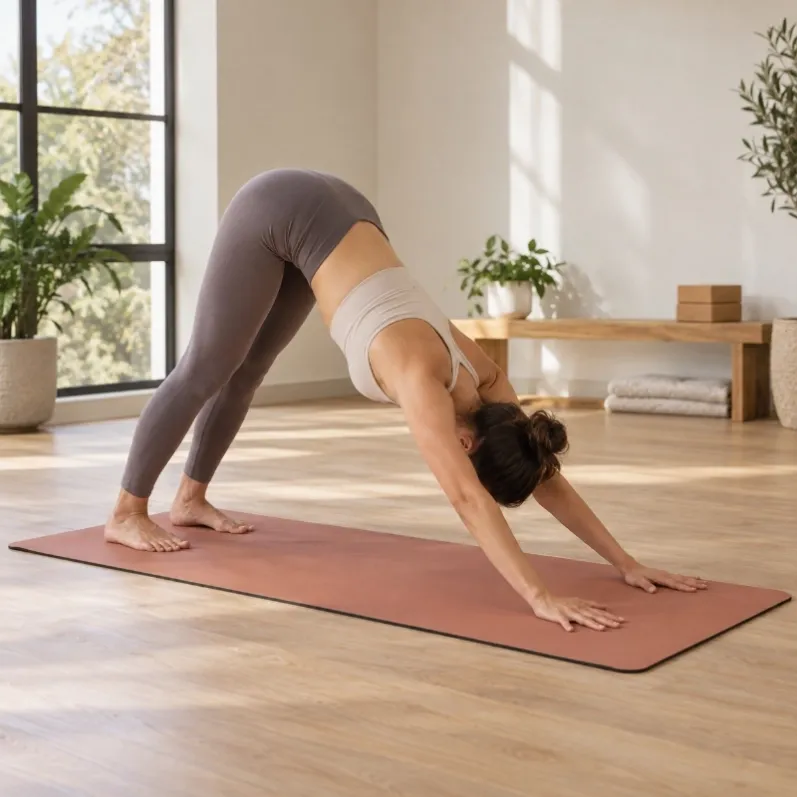
Fitness Accessories
Custom PU Natural Rubber Yoga Mat
PU yoga mat
Custom PU Natural Rubber Yoga Mat for Hot Yoga and Private Label Brands
A customizable polyurethane-surface yoga mat with a natural rubber base, developed for yoga brands, studios, fitness retailers, importers and online sellers.
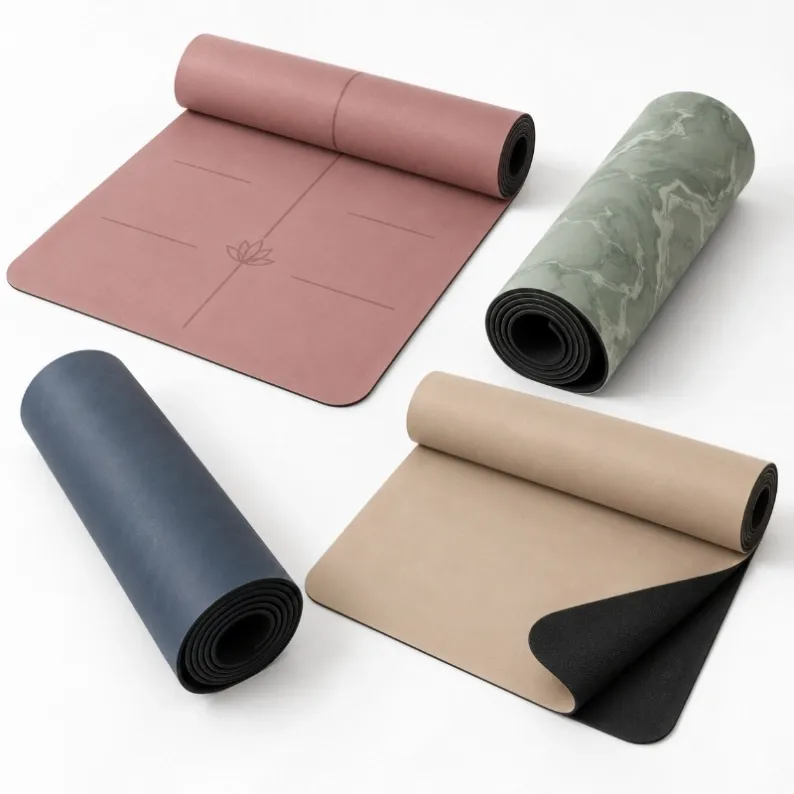
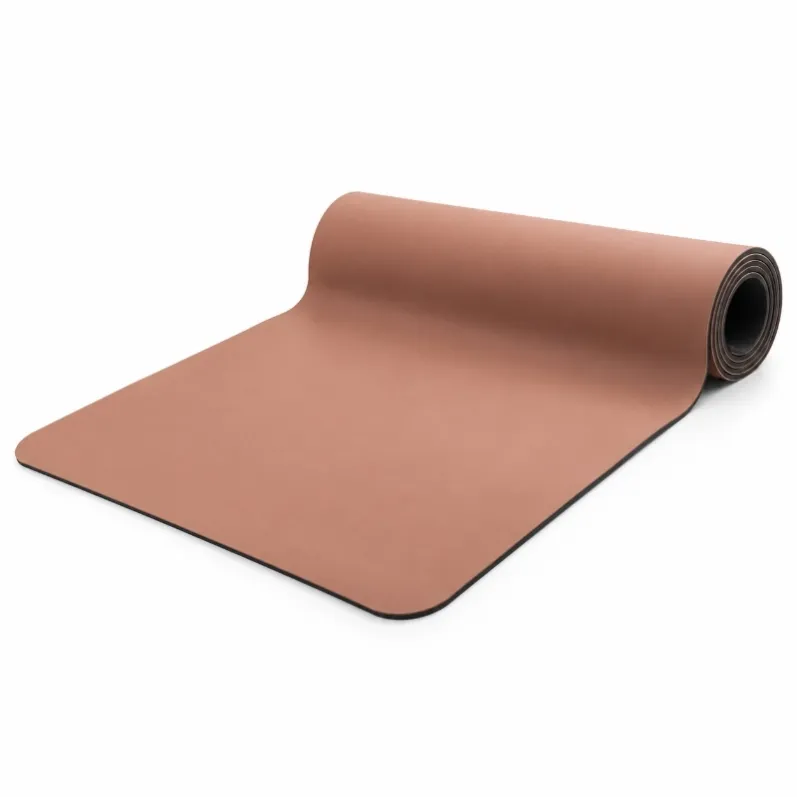
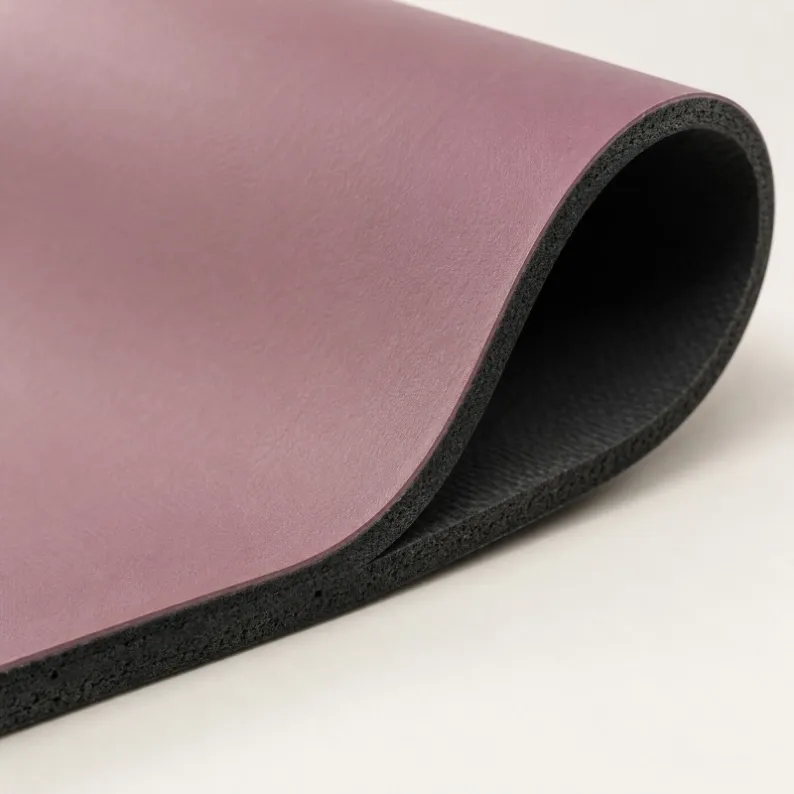
This PU natural rubber yoga mat combines a polyurethane upper surface with a natural rubber base. The PU side is designed to provide close hand and foot contact during yoga practice, while the rubber base gives the mat weight, cushioning and stable contact with the floor. It is intended for yoga brands, studio suppliers, fitness retailers, importers and online sellers that need a customizable mat rather than a generic stock design.
The standard specification is 1830 x 680 x 4.5 mm. Custom options shown in the supplied catalog include 173 or 183 cm lengths, 61, 66 or 80 cm widths, and thicknesses from 1.5 to 6.0 mm. Buyers can also develop their own surface color, printed pattern, alignment markings, logo treatment and retail packaging.
Product overview
Item | Catalog-backed specification |
|---|---|
Product type | PU natural rubber yoga mat |
Construction | PU upper surface + natural rubber base |
Standard catalog size | 1830 x 680 x 4.5 mm |
Custom lengths listed | 173 cm or 183 cm |
Custom widths listed | 61 cm, 66 cm or 80 cm |
Custom thickness range listed | 1.5-6.0 mm |
Standard catalog weight | Approximately 3 kg per mat |
Standard carton | 6 mats per carton |
Carton size in catalog | 70 x 36 x 24 cm |
Gross carton weight in catalog | Approximately 19 kg |
Customization shown | Surface color, pattern, logo, alignment line, size and packaging |
Packing figures above belong to the 1830 x 680 x 4.5 mm catalog configuration. Final weight and carton data must be recalculated when the size, thickness, print coverage, strap, bag or retail box changes.
Material and construction
Polyurethane grip surface
The upper layer is polyurethane, commonly shortened to PU. In this product structure, PU is the contact surface rather than the full body of the mat. It gives the mat a smooth, close-contact feel and is used on yoga mats developed for stronger grip during dynamic or sweat-heavy practice. Surface performance depends on the selected PU formulation and finish, so dry-grip, wet-grip, abrasion and cleaning tests should be confirmed on the approved production sample.
Natural rubber base
The natural rubber layer forms the cushioning and floor-contact base. It adds weight and helps the mat remain flat during transitions. Because the base contains natural rubber, this product should not be described as latex-free. Buyers serving latex-sensitive users should select a separately developed non-rubber construction.
Why the two layers matter
Layer | Primary function | What buyers should verify |
|---|---|---|
PU upper surface | Hand and foot contact, moisture response, color and graphics | Dry and wet grip, stain visibility, abrasion, print adhesion and cleaning method |
Bonding layer | Keeps the upper and base together | Peel strength, edge bonding, heat and humidity resistance |
Natural rubber base | Cushioning, weight, floor stability and roll recovery | Density, odor, hardness, floor grip, dimensions and aging behavior |
Available surface and design directions
The supplied catalog shows several development routes that can be adapted to a private label collection. Availability should be confirmed against the selected material, artwork and order quantity before quotation.
Option | Suitable for | Important production check |
|---|---|---|
Solid-color PU | Core yoga range and minimalist branding | Color tolerance and surface consistency |
Mixed-color PU | Marbled or flowing-color visual effects | Each production batch may show natural pattern variation |
Digital printed surface | Full artwork, illustrations and branded collections | Artwork resolution, print rub resistance and edge registration |
Alignment line design | Instructional, studio and practice-focused ranges | Line position, symmetry and print adhesion |
Cork-look or cork surface option | Natural-material visual direction | Confirm whether the quoted construction uses real cork or printed surface material |
Logo and private label options
Logo selection should be based on artwork complexity, print area, color count, surface type and the required durability. The catalog presents the following processes:
Process shown in catalog | Best used for | Pre-production check |
|---|---|---|
Laser engraving | Subtle, low-contrast branding | Depth and visibility on the approved surface |
Screen printing | Simple logos and limited colors | Ink adhesion, line width and rub resistance |
Gold stamping | Metallic decorative branding | Foil bond, cracking after rolling and heat sensitivity |
Embossing | Tonal or recessed logo treatment | Tooling, depth and surface deformation |
UV digital printing | Multi-color artwork and detailed graphics | Flexibility, abrasion and roll testing |
Heat transfer printing | Decorative patterns and color graphics | Edge adhesion, temperature control and color consistency |
Size selection for different product positions
Product position | Size direction from catalog range | Buyer consideration |
|---|---|---|
Compact or travel-oriented range | 1.5 mm thickness | Lower cushioning; verify fold or roll behavior and final weight |
Mainstream studio mat | 173/183 cm x 61/66 cm | Balance user space, carton size and retail price |
Wider practice mat | 173/183 cm x 80 cm | More practice area but higher material and freight cost |
Cushioned daily-use mat | 4.5 mm standard catalog configuration | Catalog configuration is 183 x 68 cm and approximately 3 kg |
Thicker comfort range | Up to 6.0 mm | Confirm balance stability, roll diameter, weight and carton quantity |
Who this mat is designed for
End user or channel | Relevant use case | Product requirement to prioritize |
|---|---|---|
Hot yoga practitioners | Sweat-heavy classes and heated studios | Wet grip, stain behavior, cleaning instructions and drying time |
Vinyasa and power yoga users | Frequent transitions and weight-bearing poses | Hand grip, floor stability and edge flatness |
Yoga teachers and regular practitioners | Repeated personal use | Surface durability, cushioning and easy care |
Home yoga and stretching users | Yoga, mobility and floor stretching | Comfort, storage, odor and floor compatibility |
Yoga brands and DTC sellers | Private label retail collections | Distinctive color, artwork, packaging and repeatable batches |
Studios, distributors and importers | Wholesale supply and coordinated ranges | Batch consistency, carton efficiency and replacement continuity |
Buyer problems this construction is intended to address
Common market complaint | Likely cause | What should be controlled |
|---|---|---|
Hands slide when sweat increases | Surface has limited wet-grip response | Approve dry and wet grip on the exact sample |
Edges lift or layers separate | Insufficient bonding or incomplete curing | Peel-strength, edge-bonding and aging checks |
Mat has a strong opening odor | Rubber compound, curing, storage or sealed packing | Material review, airing and odor assessment before packing |
Light colors show sweat or oil marks | Absorbent surface plus skin oils or unsuitable cleaner | Color selection and clear care instructions |
Printed logo wears away | Ink and surface are not compatible | Rub, roll, sweat and cleaning resistance |
Mat remains curled after unpacking | Tight rolling, rubber memory or insufficient conditioning | Roll-diameter and flatness recovery test |
Surface scratches during use | Nails, shoes, equipment or low abrasion resistance | Abrasion test and barefoot-use guidance |
Product is heavier than expected | Natural rubber density, width and thickness | Confirm net weight on the approved construction |
Production process
The following process describes a typical PU and natural rubber yoga mat manufacturing route. Individual equipment, adhesives and process parameters must be confirmed with the selected production line before publishing factory-specific claims.
Stage | Purpose |
|---|---|
1 Material specification | Confirm PU type, rubber formulation, colors, dimensions, artwork, logo process and packaging. |
2 Rubber compound preparation | Mix and prepare the rubber base compound according to the approved construction. |
3 Rubber sheet forming | Form the base sheet to the required width, density and surface texture. |
4 Vulcanization and conditioning | Cure the rubber and allow the material to stabilize before lamination. |
5 Surface preparation | Clean and prepare the bonding faces to support consistent adhesion. |
6 PU surface preparation | Prepare the solid-color, mixed-color or printed PU upper surface. |
7 Lamination | Bond the PU surface to the natural rubber base under controlled pressure and temperature. |
8 Adhesive curing | Condition the laminated material so the bond can develop before cutting and rolling. |
9 Printing and marking | Apply the approved logo, alignment line or full-surface artwork as required. |
10 Cutting and edge finishing | Cut the mat to size and inspect corners, edges and dimensional tolerance. |
11 Quality inspection | Check appearance, dimensions, weight, flatness, bonding, print and surface condition. |
12 Packing | Roll the mat, add the approved strap, bag, paper wrap or retail box, then pack by carton. |
Quality control points for OEM orders
A product page should not claim test results unless the corresponding report or production record is available. The following checks are recommended as a buyer-facing quality plan, not as completed test claims:
QC item | What it checks | Record to agree before production |
|---|---|---|
Dimensions and weight | Length, width, thickness and net weight | Tolerance and sampling level |
Dry and wet grip | Surface behavior with dry and perspiring hands | Test method and acceptance sample |
Floor slip resistance | Movement of the rubber base on target flooring | Floor type and test condition |
Layer peel strength | Bond between PU and natural rubber | Test direction and minimum acceptance value |
Abrasion and scratch check | Resistance to repeated contact and visible damage | Method, cycle count and rating |
Print adhesion | Logo or artwork durability | Rub medium, pressure and cycle count |
Roll and flatness recovery | Curling and ability to lie flat after packing | Roll time and recovery period |
Color consistency | Difference between sample and bulk production | Approved master sample or agreed color tolerance |
Odor assessment | Opening odor after storage and packaging | Conditioning time and evaluation method |
Carton inspection | Quantity, labels, protection and dimensions | Packing specification and shipping marks |
Care instructions for end users
- Wipe the surface with a soft damp cloth after use.
- Allow the mat to dry completely before rolling it for storage.
- Keep the mat away from prolonged direct sunlight and high heat.
- Do not use bleach, strong solvents, aggressive disinfectants or oil-based cleaners unless they have been tested on the approved PU surface.
- Use the mat barefoot and keep sharp objects, shoes, pet claws and heavy equipment away from the PU surface.
- Roll the mat with the PU surface facing outward unless the approved packing instruction states otherwise.
OEM development information buyers should provide
Required input | Examples |
|---|---|
Target product | Standard PU, mixed-color PU, printed PU, alignment mat or another approved construction |
Size and thickness | Choose from the catalog range or submit a target specification |
Color reference | Pantone code or physical color sample |
Logo artwork | Vector AI, EPS, PDF or another production-ready file |
Print requirement | Logo size, position, colors, alignment line or full-surface graphic |
Packaging | Strap, bag, paper wrap, color box, carton marks and barcode |
Target market | United States, European Union, United Kingdom, Canada or other market |
Testing requirement | Specify retailer, marketplace or destination-market protocol before quotation |
Order plan | Sample quantity, first order estimate and annual forecast |
Commercial terms
Item | Publishable wording without inventing data |
|---|---|
MOQ | Depends on the selected size, material, surface color, printing process and packaging. Request a project quotation. |
Samples | Stock and customized sample options are subject to current material and artwork requirements. |
Sample lead time | Confirm after the specification and artwork are reviewed. |
Production lead time | Confirm according to the final quantity, customization and packaging. |
Compliance testing | Testing can be arranged against the buyer's required market or retailer protocol after the exact material is confirmed. |
Shipping data | Final net weight, carton size and carton quantity are confirmed for the approved production configuration. |
Frequently asked questions
1 Is the entire mat made of PU?
No. The catalog construction uses a PU upper surface and a natural rubber base. PU provides the practice surface, while natural rubber provides cushioning, weight and floor contact.
2 What is the standard catalog size?
The standard PU natural rubber yoga mat shown in the catalog is 1830 x 680 x 4.5 mm and weighs approximately 3 kg.
3 Which sizes can be customized?
The supplied catalog lists 173 or 183 cm lengths, 61, 66 or 80 cm widths, and thicknesses from 1.5 to 6.0 mm. Feasibility must be confirmed for the selected construction.
4 Is this a latex-free yoga mat?
No. The base is natural rubber, so this product should not be marketed as latex-free.
5 Is the mat suitable for hot yoga?
The PU and rubber construction is commonly selected for sweat-heavy practice. Final dry and wet grip should be evaluated on the exact sample because surface finish and formulation affect performance.
6 Can the color and alignment lines be customized?
Yes. The catalog shows customizable surface colors, alignment lines and decorative layouts. Send a Pantone reference and vector artwork for production review.
7 Which logo methods are available?
The catalog presents laser engraving, screen printing, gold stamping, embossing, UV digital printing and heat transfer printing. The suitable method depends on the surface and artwork.
8 How should users clean the mat?
Use a soft damp cloth and let the mat dry fully before rolling. Avoid untested alcohol, bleach, solvents, strong cleaners and oil-based sprays because they may affect the PU surface.
9 What is the standard carton configuration?
For the catalog's 1830 x 680 x 4.5 mm configuration, the listed packing is six mats per 70 x 36 x 24 cm carton, approximately 19 kg gross. Customized products require new packing confirmation.
10 What information is needed for a quotation?
Provide the size, thickness, color, logo file, print method, packaging, quantity, destination market and any required chemical or performance tests.
Request a Custom PU Yoga Mat Sample
Send us your required size, surface color, logo file, alignment design, packaging and estimated quantity. We will review the specification and recommend the appropriate sample route before bulk production.
Danyang Zhenxing Latex Products Co., Ltd.
Website: www.oemresistancebands.com
WhatsApp: +86 15105286496