Fitness Accessories
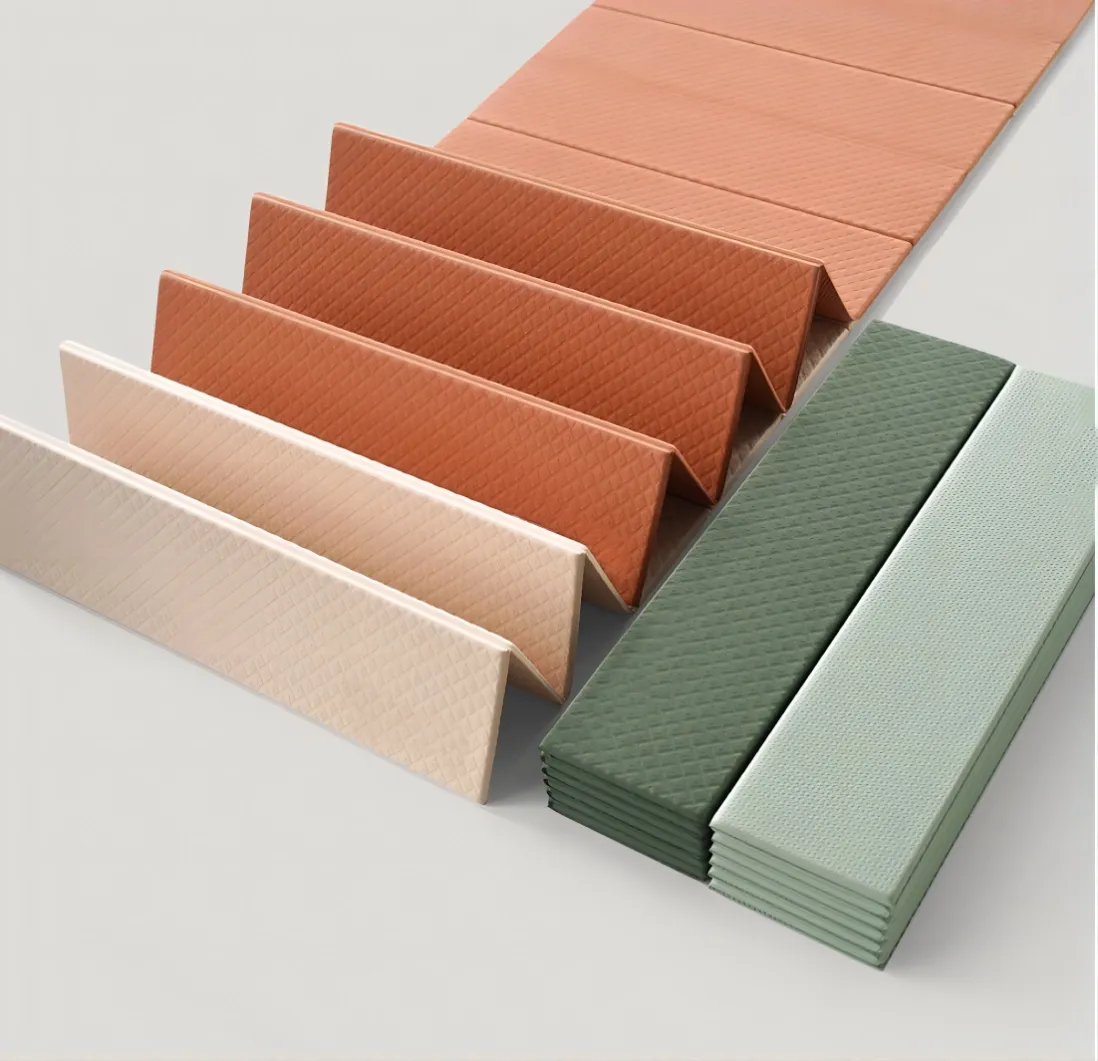
Foldable Yoga Mat | 6mm Non-Slip POE Travel Mat, Extra Wide 72"x31" with Carry Bag
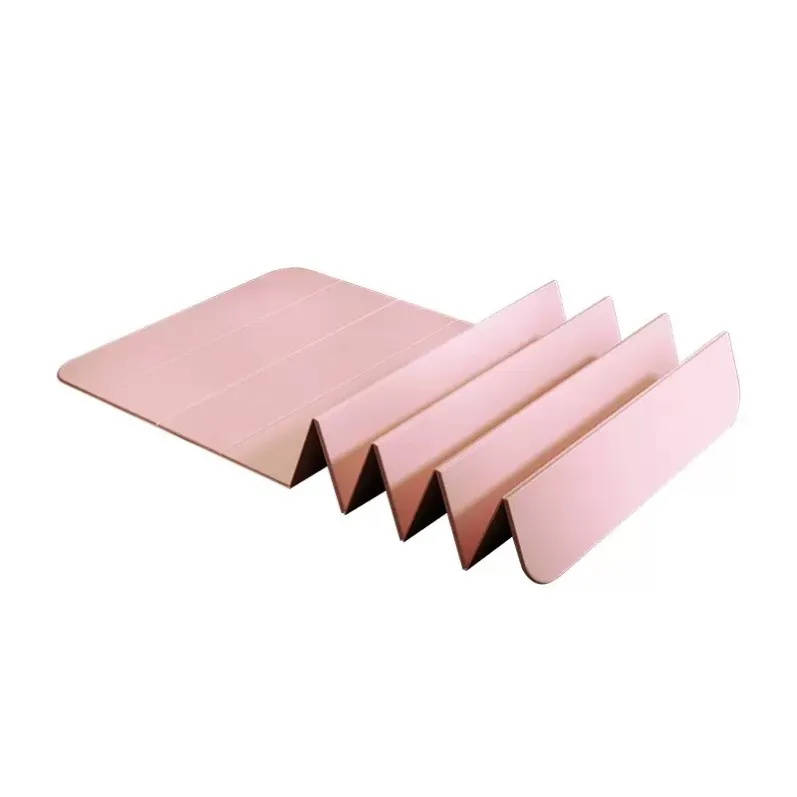
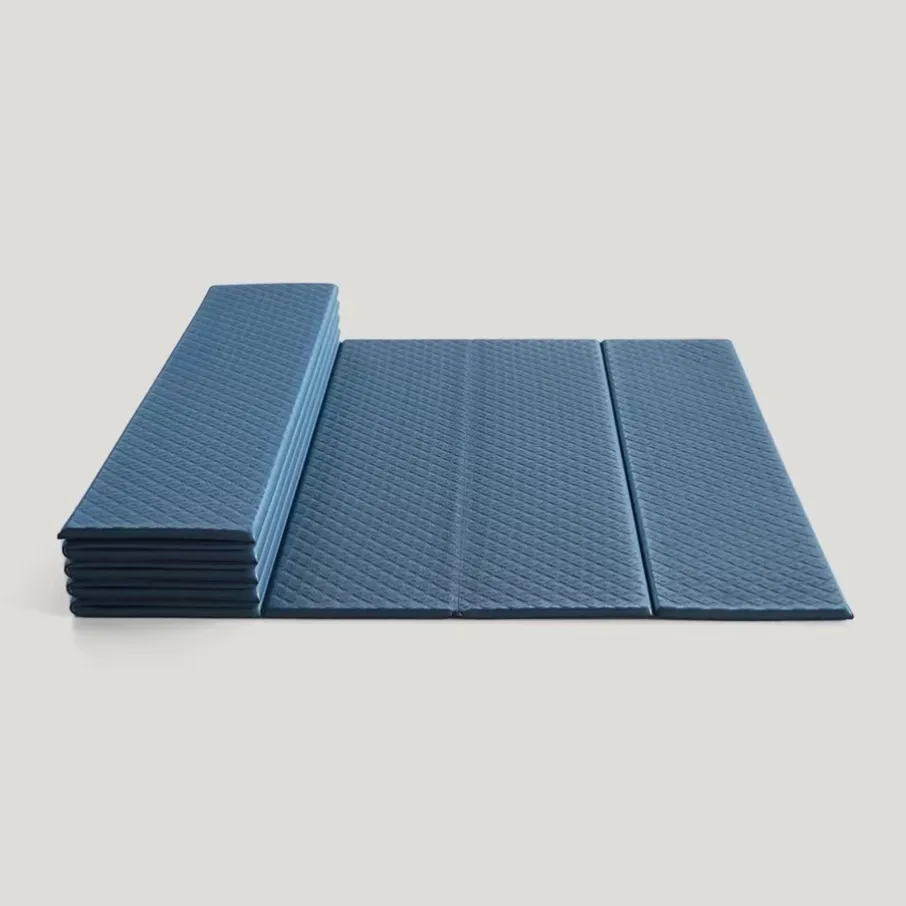
Danyang Zhenxing Extra-wide foldable yoga mat in high-density POE. Folds flat to 14"x10"x3" for carry-on luggage and small apartments. 6mm cushion, non-slip dual-texture surface, machine-washable canvas bag included.
Foldable Yoga Mat — 6mm Non-Slip POE, Extra Wide 72" x 31"
Folds flat to carry-on size. Lays flat when you need it. Built with high-density POE that survives 500+ fold cycles without cracking at the crease.
Not all foldable mats are built to fold.
Most mats marketed as "foldable" are thinner versions of roll-up mats, made from the same low-cost TPE foam that whitens and cracks at the crease within weeks. We started from the material up — a high-density POE (Polyolefin Elastomer) formulation chosen specifically for its resilience under repeated compression and folding.
Specs at a glance:
- Size: 72" x 31" (183cm x 80cm) — extra wide
- Thickness: 6mm (0.24")
- Weight: 1.5 lbs (680g)
- Material: POE (Polyolefin Elastomer) — PVC-free, phthalate-free, recyclable
- Folded size: Approx. 14" x 10" x 3"
- Included: 8oz machine-washable canvas carry bag
Why POE, Not TPE or PVC
Thermoplastic Elastomers (TPE) are the default material for most folding mats — cheap, fast to mold, and the reason the category has a reputation for crease cracking. In TPE, repeated folding causes irreversible molecular orientation at the fold line. You see it as permanent white stress marks around fold 30, and a faint tearing sound around fold 60.
Polyolefin Elastomer (POE) is a higher-grade TPE variant produced with metallocene catalysis. It's molded without plasticizers, which means:
- No phthalate migration — safe for skin contact
- ~40% higher rebound resilience than standard TPE — recovers flat faster after unfolding
- Better low-temperature performance — won't stiffen or crack in air-conditioned rooms or cold transit
- Lower density — roughly 35% lighter than a PVC mat of the same size
Our POE formulation was tested internally: 500 fold cycles, zero visible cracks at the crease, 92%+ surface texture integrity retained. That's from accelerated aging testing on the factory floor, not a marketing claim.
Size & Fit
72" x 31" is a validated "tall-friendly" size.
Most foldable mats stick to the standard 68" x 24" (173cm x 61cm). If you're over 5'9", your knees hang off the edge in seated forward folds. The 31" width gives shoulder stand, crow, and side plank enough room for elbow support — your palm won't land off-mat mid-pose.
Actual folded footprint: about 14" x 10" x 3". That fits:
- Flat in the bottom of a standard carry-on, with clothes on top and no weird bulge
- In the laptop compartment of a 15" backpack
- On a yoga studio locker hook, without eating shelf space
Who this is for (based on search behavior patterns):
- Frequent travelers — hotel room floors are unpredictable; a personal mat is non-negotiable
- Apartment dwellers — no dedicated yoga corner; the mat lives under the bed or in a closet gap
- Studio commuters — not hauling a long roll mat on the subway; folds into a tote
- Outdoor practitioners — parks, beaches, patios; a folded mat stays put in wind better than a roll
Manufacturing & Durability
The engineering challenge isn't the mat. It's the crease.
A standard yoga mat foams uniformly. Force it to fold, and the crease compresses to roughly 15% of its original thickness — the internal cell structure collapses. If the material's rebound is insufficient, that crease becomes a permanent groove that throws off balance poses.
Our approach is zoned density control:
- Main body: standard-density POE foam, 6mm cushion
- Fold lines: a ~0.8mm compression channel molded into the foam, so folding doesn't over-compress the material
- Surface: dual-texture top — wave pattern plus fine contact points for dry and damp grip; granular base texture holds on wood, tile, and studio carpet
An honest note on creases: After unfolding, you'll see faint visual lines at the folds. That's physics — any mat that folds will show them. But because the fold-line density is tuned, you won't feel a ridge or dip under your hands or feet. We don't claim "zero crease marks," because any brand that does is either lying or selling a mat too thin to matter.
The Carry Bag Detail Most Brands Skip
Most foldable mats ship with a thin nylon drawstring bag that frays in two weeks. Ours is an 8oz canvas tote, machine-washable at 30°C, with an interior pocket for keys or a hair tie.
The bag does more than hold the mat:
- Studio run: mat + phone + keys + transit card in one bag
- Travel: dirty clothes go between the mat and bag, isolated in a corner of the suitcase
- Outdoor session: sand and dirt shake off into the bag, cleaned at home in one go
FAQ
Q: Foldable or rolled — which should I actually buy?
A: If 80%+ of your practice is at home with a fixed storage spot, a rolled mat is better — thicker, more durable, lies flatter. If you practice outside the home at least once a week (studio, travel, outdoors), or you're short on space, a foldable mat is the rational choice. Its core value isn't a "better yoga experience" — it's lower friction to actually leave the house and practice.
Q: Will the fold line crack over time?
A: Depends on material and fold frequency. Standard TPE mats show crease whitening in 3–6 months at once-daily folding. Our POE formulation showed no structural cracking after 500 accelerated fold cycles in lab testing. At once-daily folding, that's roughly 16 months of service life. If you fold more than twice a day, expect slight whitening at the crease — normal material fatigue, not a functional failure.
Q: Is 6mm thick enough?
A: For yoga, Pilates, stretching, and core work, yes. For long knee-down holds (camel, kneeling lunge), fold the mat double just under your knees — that's the hidden advantage of a foldable mat. You add cushion locally without adding thickness everywhere.
Q: Does it smell?
A: POE contains no added plasticizers. Out of the box there's a mild polymer scent (similar to new electronics), which dissipates in 24–48 hours in a ventilated room. Don't use chemical cleaners to speed it up — wipe with water and air-dry.
Q: Can I machine wash it?
A: The mat itself: hand wash with warm water and mild soap, soft cloth. The carry bag: machine washable at 30°C, gentle cycle. Avoid direct sun and tumble drying — air-dry only.
Q: Is it good for hot yoga?
A: Not recommended for hot yoga or heavy-sweat Vinyasa. The POE texture is engineered for dry grip. Heavy sweat creates a water film and reduces friction. For hot yoga, pair it with a yoga towel, or choose a microfiber-top/rubber-base hybrid travel mat.