Fitness Accessories
Door Anchor for Resistance Bands | Exercise Band Door Anchor Manufacturer
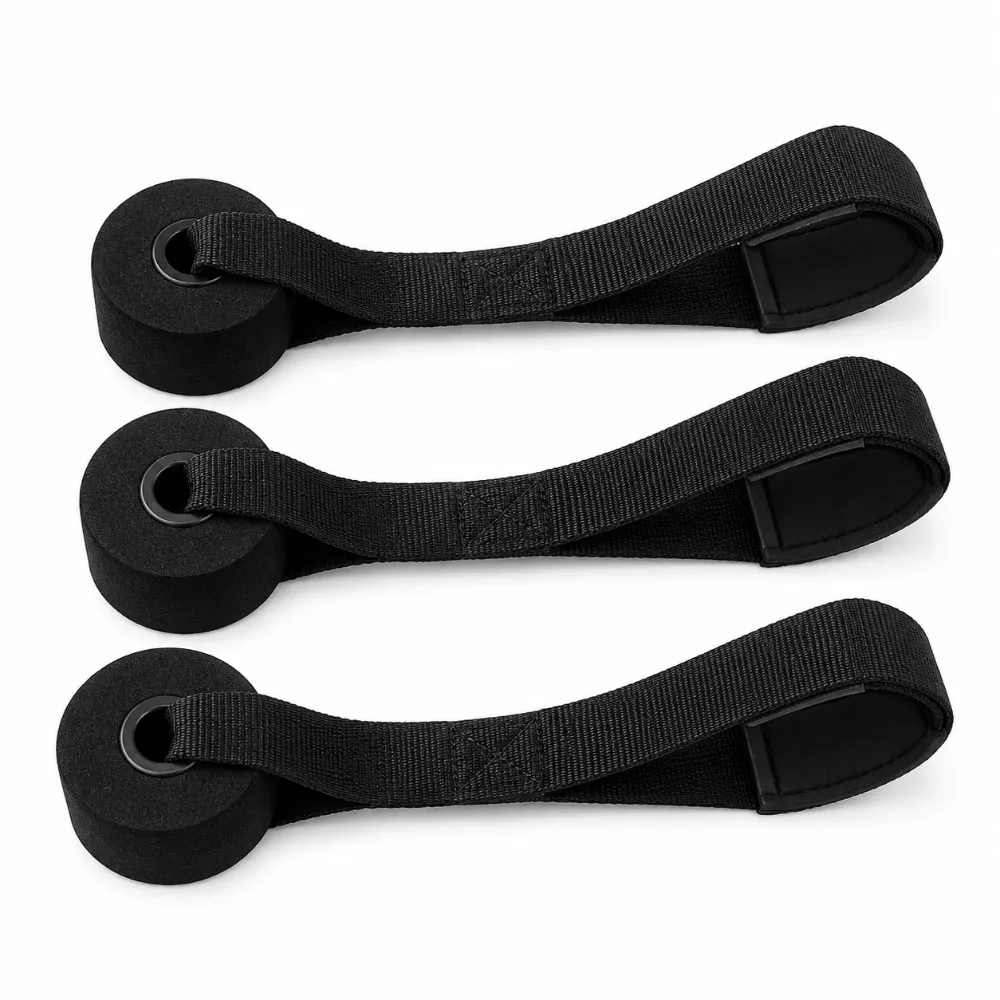
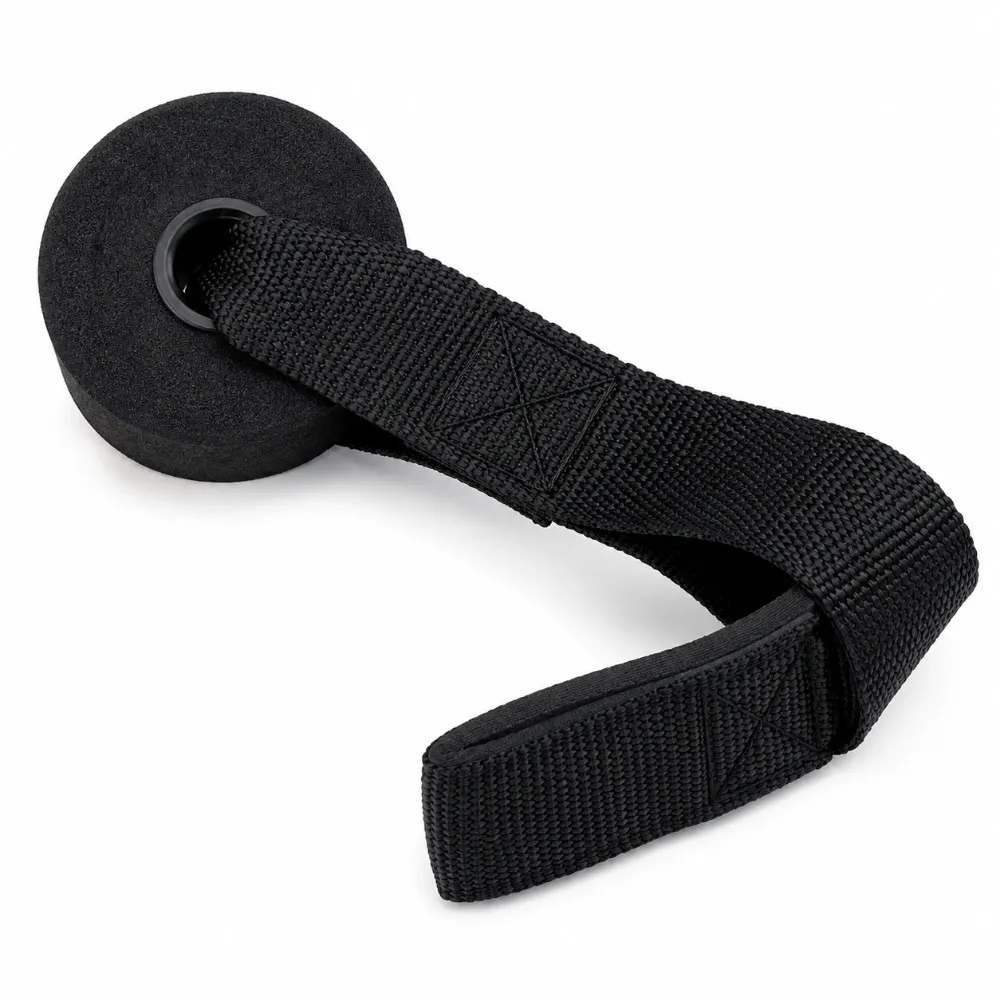
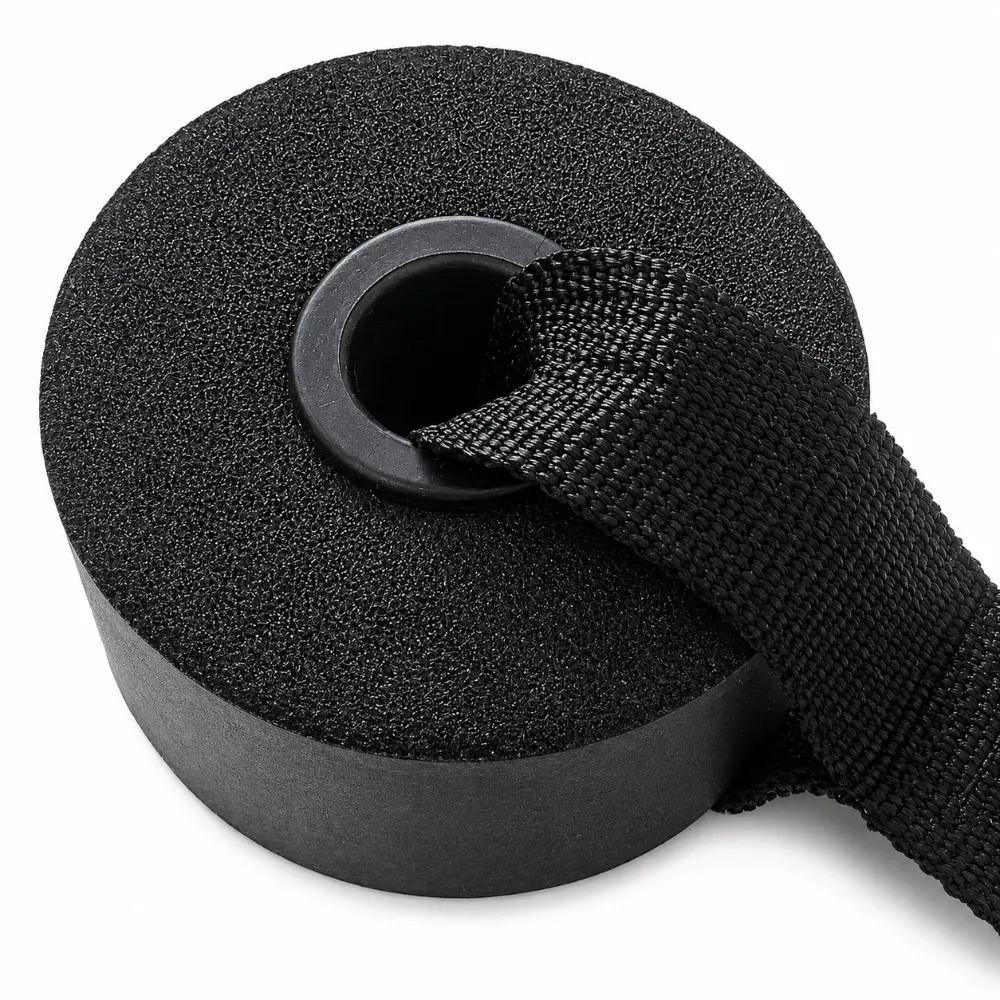
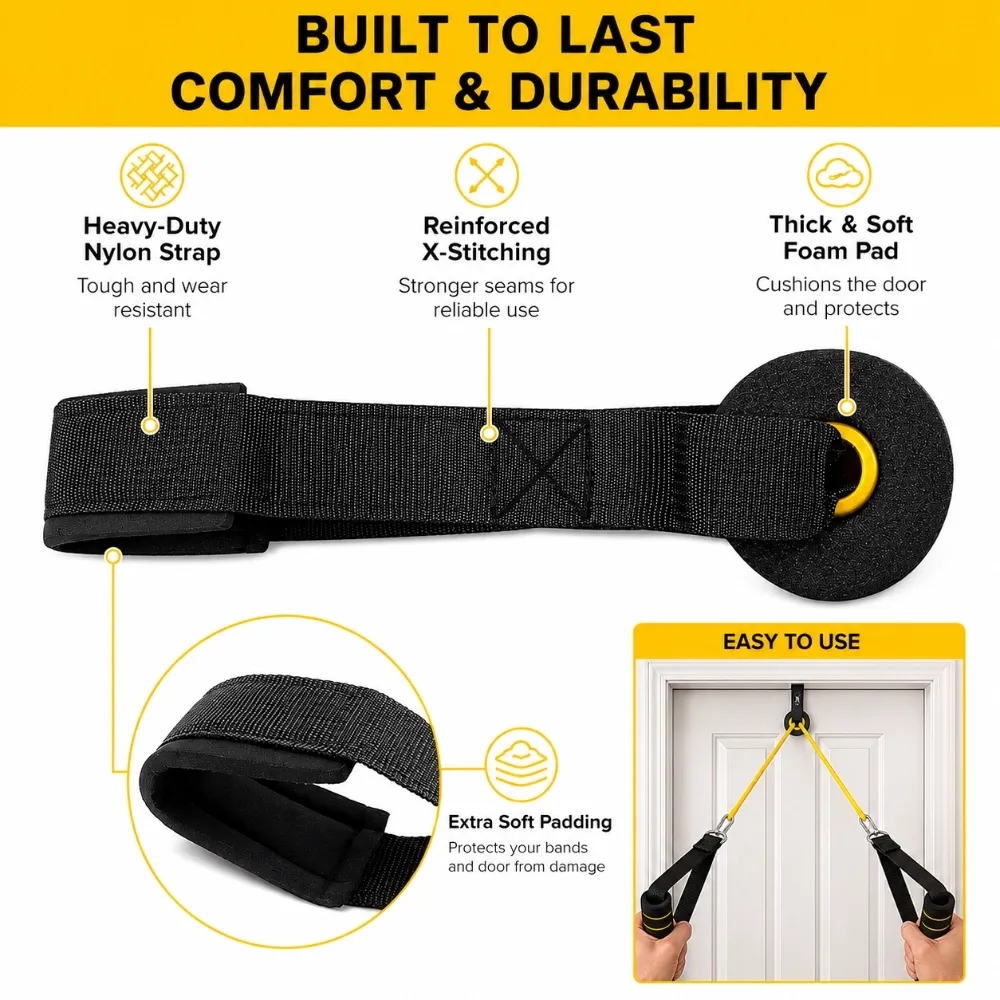
Door anchor for resistance bands and stretch bands. Soft foam stopper, reinforced webbing and loop attachment for home workouts. OEM colors & packaging
Specifications
- Diameter
- 7cm
Door Anchor for Resistance Bands – Home Workout Band Attachment
Turn a Door Into a Resistance Band Training Station
A door anchor for resistance bands is a compact attachment designed to secure compatible exercise bands at different positions around a suitable closed door, allowing users to perform anchored resistance exercises without installing permanent wall-mounted equipment.
Our resistance band door anchor combines a soft padded stopper with strong woven webbing and a loop attachment. The padded section sits on the opposite side of the closed door while the webbing provides an attachment point for compatible resistance bands.
By positioning the anchor at the top, middle or bottom of the door, users can change the pulling direction for upper-body, core and lower-body resistance training.
Compact and easy to store, this exercise band door anchor is suitable for home gyms, travel workout kits, resistance tube sets and private-label fitness products.
Why Use a Resistance Band Door Anchor?
Resistance bands can be used without an anchor, but adding a fixed attachment point greatly expands the available pulling angles.
Multiple Training Angles
Changing the height of the resistance band door anchor changes the direction of resistance.
A high anchor can support downward pulling patterns, a middle anchor provides horizontal resistance, and a low anchor provides upward resistance.
This creates more exercise possibilities from a single resistance band system.
No Permanent Wall Installation
Unlike a wall-mounted anchor, a door anchor does not normally require drilling or permanent installation.
This makes it especially useful for home workouts, apartments and portable fitness programs.
Padded Door Contact
The soft padded stopper creates a broad contact area against the appropriate side of the door.
This construction is designed to provide a more suitable contact surface than placing bare hardware directly against the door.
Reinforced Webbing
The woven strap connects the padded stopper to the resistance-band attachment area.
Webbing dimensions, stitching and construction can be customized according to OEM project requirements.
Compact & Portable
A door anchor takes up very little storage space and can easily be packed with resistance tubes, handles, ankle straps and other resistance band accessories.
Door Anchor for Resistance Bands Specifications
Specification | Details |
|---|---|
Product Name | Door Anchor for Resistance Bands |
Material | foam and polyester |
Stopper | Padded / Foam Construction |
Strap | Woven Webbing |
Attachment | Webbing Loop |
Color | Black / Custom Colors |
Band Compatibility | Depends on Band Type & Dimensions |
Size | diameter 7cm |
Application | Home Fitness / Resistance Training / Portable Workouts |
Logo | Custom Branding Available |
Packaging | Polybag / Carry Bag / Retail Box / Custom Kit |
OEM / Private Label | Available |
Compatibility note: resistance band type, dimensions and intended load should be confirmed before use or bulk ordering.
How Does an Exercise Band Door Anchor Work?
The principle is simple.
The padded stopper is positioned on the appropriate opposite side of a suitable door. The webbing passes through the door gap, and the door is fully closed and secured before the resistance band is attached.
The stopper prevents the webbing from simply passing through the door gap while the strap creates an accessible anchor point on the training side.
This allows an exercise band door anchor to create resistance from different heights without requiring permanent gym equipment.
Three Door Anchor Positions
- Place the anchor near the top of a suitable door.
Main training areas:
Back • Latissimus Dorsi • Triceps • Core • Shoulders
High anchor positions are useful for exercises requiring resistance to pull downward or diagonally.
2. Middle Anchor Position
Position the door anchor for resistance bands around the middle section of the door.
Main training areas:
Chest • Back • Shoulders • Arms
This creates a more horizontal resistance direction suitable for various push-and-pull movements.
3. Low Anchor Position
Position the anchor near the bottom of the door.
Main training areas:
Biceps • Shoulders • Legs • Glutes • Hips
A low anchor creates resistance pulling upward from near floor level.
Applications by Body Area
Back Training
Target areas: Latissimus dorsi, rhomboids, trapezius and rear shoulders.
A middle or high anchor provides different pulling angles for resistance-band back training.
Chest Training
Target areas: Pectoralis major, anterior deltoids and triceps.
A securely positioned anchor can provide a fixed resistance direction for selected pressing and chest-focused band movements.
Shoulder Training
Target areas: Deltoids and supporting shoulder musculature.
Different anchor heights allow users to adjust resistance direction for controlled shoulder exercises.
Arm Training
Target areas: Biceps, triceps and forearms.
Low, middle and high anchor positions provide different pulling directions for arm-focused resistance training.
Core Training
Target areas: Abdominal muscles and obliques.
Anchored resistance can be used to create horizontal or diagonal loading for selected core exercises.
Legs, Glutes & Hips
Target areas: Gluteal muscles, quadriceps, hamstrings and hip musculature.
Low anchor positions can be incorporated into compatible lower-body resistance-band exercises.
Compatible Resistance Band Types
One of the advantages of a door anchor for resistance bands is its ability to work as part of different resistance-training systems, provided the band and anchor are compatible.
Resistance Tubes
Door anchors are commonly combined with resistance tubes and handles to create a portable home resistance-training system.
Exercise Bands
Compatible exercise bands can use the anchor to create a fixed pulling point for upper- and lower-body workouts.
Stretch Bands
A stretch band door anchor can provide a fixed attachment point for compatible stretch-band training and controlled mobility exercises.
Resistance Bands with Handles
The anchor can also be supplied as part of a complete resistance band with handles kit.
For OEM buyers, we can combine:
Resistance Bands + Door Anchor + Handles + Ankle Straps + Carry Bag + Custom Packaging
Door Anchor vs. Training Without an Anchor
Training Method | Without Door Anchor | With Door Anchor |
|---|---|---|
Fixed Attachment Point | Limited | Yes |
High Pulling Angle | Limited | Available |
Horizontal Pulling Angle | Limited | Available |
Low Pulling Angle | Limited | Available |
Permanent Installation | No | No permanent wall installation |
Portable | Yes | Yes |
Home Workout | Yes | Expanded exercise options |
The purpose of the anchor is not to increase the resistance of the band itself. Instead, it provides a fixed resistance direction, which expands the types of exercises that can be performed.
How to Use a Door Anchor for Resistance Bands
Step 1 – Inspect the Door and Anchor
Before training, inspect the door, frame, hinges, latch, webbing, stopper and resistance band.
Do not use damaged equipment.
Step 2 – Position the Anchor
Place the padded stopper on the appropriate opposite side of a suitable door and position it at the desired height.
Step 3 – Close and Secure the Door
Close the door completely and confirm that it is properly latched and stable.
Whenever possible, the resistance force should pull the door toward its frame rather than in a direction that could pull it open.
Step 4 – Attach the Resistance Band
Connect or route the compatible resistance band according to the anchor and band design.
Make sure the band does not rub against sharp surfaces.
Step 5 – Test Before Exercise
Apply light tension first.
Confirm that the anchor, door and resistance band remain stable before increasing training tension.
Door Anchor Safety
For safer resistance band training:
- Use only a structurally sound door and frame.
- Make sure the door closes and latches completely.
- Inspect the anchor and resistance band before every workout.
- Do not use frayed, cut or damaged webbing.
- Keep the resistance band away from sharp door edges or hardware.
- Apply light tension first to check the setup.
- Do not exceed the specified load or intended use of the product.
- Position yourself so that an accidental release is less likely to direct the band toward your face.
- Stop using the anchor if the foam, webbing or stitching shows significant damage.
The door, anchor and resistance band should all be suitable for the intended exercise and load.
OEM Door Anchor for Resistance Bands
For B2B buyers, we supply resistance band door anchor products as standalone accessories or as components of complete private-label resistance band sets.
Custom Webbing Colors
Choose standard colors or develop colors that coordinate with your resistance band collection.
Custom Stopper Size
The foam stopper dimensions and related construction can be developed according to product requirements.
Custom Logo
Branding options can be developed on the webbing, label, carry bag or retail packaging depending on the selected product structure.
Custom Stitching
Webbing length, reinforcement method and stitching specifications can be developed according to approved OEM samples.
Custom Packaging
Available options can include:
Individual Polybag • Drawstring Bag • Retail Box • Instruction Card • Barcode Label • Complete Resistance Band Kit
Complete Resistance Band Accessory Sets
For fitness brands and wholesalers, a stretch band door anchor often has greater retail value when sold as part of a complete workout system.
A typical OEM configuration can include:
1 × Door Anchor
2 × Resistance Band Handles
2 × Ankle Straps
Resistance Tubes / Compatible Exercise Bands
1 × Carry Bag
1 × Exercise Guide
1 × Custom Retail Package
This allows brands to develop a complete home workout kit from coordinated resistance band accessories.
Quality Control
Webbing Inspection
Webbing is checked for dimensions, surface condition and visible defects.
Stitching Inspection
Reinforced stitching areas are inspected according to the approved sample and production requirements.
Stopper Inspection
The padded stopper is checked for dimensions, shape and assembly condition.
Assembly Inspection
The connection between the stopper and webbing is inspected before final packaging.
Functional Testing
OEM products can be evaluated according to agreed specifications and intended application requirements.
Final Inspection
Finished door anchors for resistance bands are visually checked before packing and shipment.
Industries We Serve
Our OEM door anchors are suitable for:
Resistance Band Brands — standalone accessories and complete sets.
Home Fitness Brands — portable door-based training systems.
Gyms & Personal Trainers — compact resistance-training accessories.
Physical Therapy & Rehabilitation Suppliers — compatible low-resistance training systems.
Sporting Goods Distributors — wholesale and private-label programs.
E-Commerce Sellers — accessory replacements, bundles and complete resistance band kits.
FAQ – Door Anchor for Resistance Bands
What is a door anchor for resistance bands?
A door anchor for resistance bands is an accessory that creates a temporary fixed attachment point on a suitable closed door, allowing compatible resistance bands to be used from high, middle or low positions.
How do I use a resistance band door anchor?
Position the padded stopper on the appropriate opposite side of a suitable door, close and secure the door completely, connect the compatible resistance band, and test the setup with light tension before exercising.
Can a door anchor be used at different heights?
Yes. Depending on the door and anchor design, it can be positioned at high, middle or low locations to create different resistance directions.
What exercises can I do with an exercise band door anchor?
An exercise band door anchor can expand training options for the back, chest, shoulders, arms, core and lower body when paired with compatible resistance bands.
Does a door anchor increase band resistance?
No. The anchor itself does not increase the band's resistance. It creates a fixed attachment point and changes the direction from which resistance is applied.
Can I use it with stretch bands?
It can be used as a stretch band door anchor when the band dimensions, attachment method and intended load are compatible with the anchor.
Will a resistance band door anchor damage the door?
A padded stopper is designed to provide a softer contact surface, but suitability depends on the door, frame, anchor construction and how it is used. Always inspect the door and follow the product instructions before training.
Can I order only the door anchor?
Yes. Door anchors can be supplied individually, in pairs or as part of a complete resistance band accessory kit.
Can you customize the color and logo?
Yes. OEM options can include custom webbing colors, branding, labels and retail packaging according to project requirements.
Can you supply door anchors with resistance band handles?
Yes. Door anchors, resistance band handles and other compatible accessories can be combined into private-label fitness kits.