Oct 9, 2026Buying Guides
Senior Strength Training: 7 Safe Resistance Band Exercises for Older Adults at Home
Discover 7 beginner-friendly resistance band exercises for seniors to build strength, support balance, improve mobility, and stay active at home.
Senior Strength Training: 7 Safe Resistance Band Exercises for Older Adults at Home
Introduction: Why Senior Strength Training Matters
Staying strong is an important part of maintaining an active and independent lifestyle as we age. Everyday activities such as climbing stairs, carrying groceries, standing up from a chair, and reaching overhead all require muscle strength, balance, and mobility.
That is why senior strength training deserves a place in a well-rounded fitness routine. Regular muscle-strengthening exercise can help older adults maintain physical function, preserve independence, and support their ability to perform everyday tasks.
The good news? You do not need an expensive gym membership or a large collection of weights to get started.
Resistance band exercises for seniors offer a convenient way to introduce resistance training at home. These lightweight, portable exercise bands come in different resistance levels and can be used for seated exercises, standing movements, upper-body workouts, and lower-body training.
Whether you are a beginner, an older adult returning to exercise, or a caregiver helping a loved one stay active, this guide explains how to get started with resistance band training, choose the right equipment, and build a simple home workout routine.
Safety note: This article provides general fitness information, not individualized medical advice. Consult a qualified healthcare professional before starting a new exercise program if you have chronic health conditions, recent injuries, significant balance difficulties, or other concerns about exercising safely.
1. What Is Strength Training for Older Adults?
Strength training, also called resistance training, involves working your muscles against resistance. That resistance can come from free weights, exercise machines, your own body weight, or elastic resistance bands.
For older adults, strength training can focus on practical movements that support everyday life, including:
- Standing up and sitting down.
- Carrying shopping bags.
- Reaching for objects on shelves.
- Maintaining posture while walking.
- Moving the hips and legs with greater control.
- Performing daily activities with less physical difficulty.
According to the U.S. Centers for Disease Control and Prevention (CDC), adults aged 65 and older should include muscle-strengthening activities on at least two days each week, alongside aerobic and balance activities.
A balanced exercise routine does not need to be complicated. The most important considerations are choosing appropriate exercises, using proper technique, and building consistency over time.
2. Benefits of Resistance Band Exercises for Seniors
Resistance bands can be a practical addition to a home exercise routine. They allow users to perform a variety of movements without relying exclusively on traditional gym equipment.
Build and Maintain Muscle Strength
Muscle strength supports many everyday activities, from getting out of bed to carrying household items.
Resistance band workouts allow older adults to challenge different muscle groups, including the arms, shoulders, chest, back, hips, and legs.
Starting with light resistance and gradually increasing the challenge can help make strength training more manageable for beginners.
Support Balance and Everyday Mobility
Balance depends on several factors, including muscle strength, coordination, vision, and the body's ability to respond to changes in position.
Strength exercises can complement balance-specific activities as part of a comprehensive senior fitness program.
Resistance band exercises for the hips and legs may be especially useful for incorporating controlled lower-body movements into a workout. However, resistance bands alone do not guarantee better balance or prevent falls.
Encourage Low-Impact Exercise
Many resistance band exercises can be performed while seated or standing with support.
This flexibility makes resistance bands a useful option for older adults who prefer low-impact workouts or want to begin with simple movements.
Exercise selection should still match the individual's ability, comfort, and medical needs.
Make Home Workouts More Convenient
Resistance bands are lightweight, easy to store, and generally require less space than large exercise machines.
They can be useful for:
- Home workouts for seniors.
- Beginner resistance training.
- Travel-friendly fitness routines.
- Seated strength exercises.
- Low-impact workouts for older adults.
A chair, a small exercise area, and an appropriately selected resistance band may be enough for a basic workout.
3. How to Choose the Best Resistance Bands for Seniors
Choosing the right exercise equipment can make it easier to develop a consistent workout habit.
When shopping for resistance bands for seniors, consider the following features.
Resistance Level
Resistance bands are available in different levels of tension, often identified by colors or manufacturer-provided resistance ranges.
Beginners should choose a band that allows them to complete the movement slowly and with control.
A band that is too difficult may encourage poor technique, while one that provides too little resistance may not offer enough challenge as strength improves.
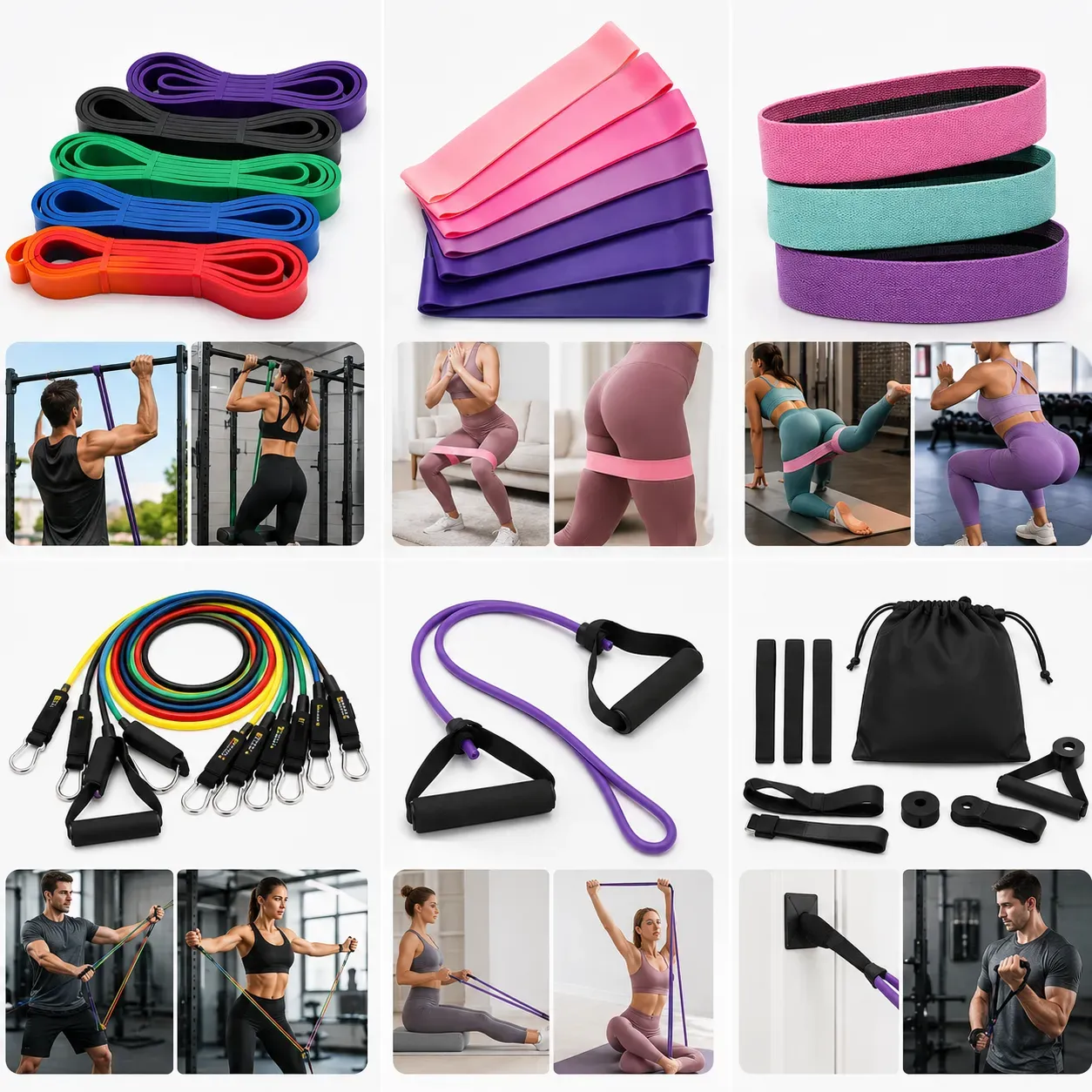
Band Type
Different band designs serve different purposes.
Loop resistance bands: These closed-loop bands are commonly used for hip, thigh, and glute exercises.
Flat resistance bands: These versatile bands can be used for gentle stretching and various upper- and lower-body exercises.
Tube resistance bands with handles: These often resemble cable-machine exercises and can be useful for movements such as rows and biceps curls.
The best choice depends on the exercises you plan to perform, your grip comfort, and your physical abilities.
Grip and Comfort
Older adults with limited hand strength or joint discomfort may prefer bands that are easy to hold and position.
Look for comfortable handles when appropriate, clear resistance labeling, and materials that are easy to inspect before use.
Durability and Safety
Inspect resistance bands for tears, cracks, thinning, or other visible damage before each workout.
Follow the manufacturer's instructions for anchoring, stretching, cleaning, and storage. Never use a damaged band, and avoid positioning a stretched band where it could snap toward your face.
For a home exercise routine, the best resistance bands for seniors are those that match the user's ability, provide suitable resistance, and can be used safely and comfortably.
4. Seven Beginner-Friendly Resistance Band Exercises for Seniors
The following exercises provide a starting point for a basic resistance band workout at home.
Choose only movements appropriate for your current fitness level. If standing exercises feel unsteady, work with a qualified professional to identify suitable modifications.
Exercise 1: Seated Resistance Band Row
Targets: Upper back, shoulders, and arms.
Why try it: This movement trains the muscles involved in pulling and maintaining upper-body posture.
How to do it:
- Sit upright on a stable chair with your feet supported.
- Hold the band with both hands, using a setup recommended by the manufacturer.
- Begin with your arms extended comfortably in front of you.
- Pull your elbows backward while keeping your shoulders relaxed.
- Slowly return to the starting position.
Start with a light band and avoid leaning backward to create momentum.
Exercise 2: Seated Biceps Curl
Targets: Biceps and forearms.
Why try it: Stronger arms can support everyday tasks such as carrying light objects.
How to do it:
- Sit on a stable chair.
- Position the band securely according to its instructions.
- Hold the ends with your palms facing forward.
- Bend your elbows to bring your hands toward your shoulders.
- Lower your hands slowly.
Keep your elbows close to your sides and avoid swinging your arms.
Exercise 3: Seated Chest Press
Targets: Chest, shoulders, and triceps.
Why try it: A controlled pressing movement can help train the muscles used for pushing objects.
How to do it:
- Sit upright and position the band securely behind your upper back, following the manufacturer's instructions.
- Hold the band at chest level.
- Extend your arms forward without locking your elbows.
- Return slowly to the starting position.
Stop if you feel shoulder pain or cannot maintain a comfortable range of motion.
Exercise 4: Seated Knee Extension
Targets: Quadriceps at the front of the thighs.
Why try it: The quadriceps play an important role in movements such as standing up from a chair.
How to do it:
- Sit on a stable chair with your back supported.
- Begin with both feet resting comfortably on the floor.
- Slowly straighten one knee within a comfortable range of motion.
- Pause briefly, then lower your foot.
- Repeat on the other side.
This movement can be performed without a resistance band initially. Only add resistance with an appropriate setup and professional guidance when needed.
Exercise 5: Standing Hip Abduction
Targets: Outer hips and hip stabilizing muscles.
Why try it: Hip strength is one component of a well-rounded lower-body exercise program.
How to do it:
- Stand beside a sturdy counter or other stable support.
- Place a loop band around your thighs only if the band is designed for that placement.
- Keep your torso upright and your supporting knee slightly relaxed.
- Move one leg gently out to the side.
- Return slowly and repeat on the other side.
Keep both feet controlled and avoid leaning your body sideways.
If standing balance is limited, ask a physical therapist or qualified exercise professional about a suitable seated alternative.
Exercise 6: Glute Bridge or Seated Glute Exercise
Targets: Gluteal muscles and hip extensors.
Why try it: The glutes help with hip movement and activities such as rising from a chair.
Option A: Bodyweight glute bridge
- Lie on your back on a firm exercise mat, with your knees bent and feet flat.
- Tighten your gluteal muscles gently.
- Lift your hips only as high as comfortable.
- Lower slowly.
Option B: Seated glute exercise
- Sit upright on a stable chair.
- Gently tighten your gluteal muscles.
- Hold briefly while breathing normally.
- Relax and repeat.
A resistance band is not necessary for beginners. If using one, choose a design and placement appropriate for the exercise.
Exercise 7: Seated Shoulder External Rotation
Targets: Rotator cuff and shoulder stabilizing muscles.
Why try it: This exercise introduces controlled shoulder rotation, which may be useful in a broader upper-body strengthening routine.
How to do it:
- Sit upright with your elbows bent and close to your sides.
- Hold a light resistance band between your hands.
- Keep one elbow in place while gently moving your hand outward.
- Return slowly to the starting position.
- Repeat on the other side if appropriate.
Use very light resistance and a comfortable range of motion. Stop if the movement causes pain.
How Many Repetitions Should Seniors Do?
For many adults who can safely perform resistance exercises, one set of 8–12 controlled repetitions is a useful general starting reference.
Beginners may need fewer repetitions, no resistance, or shorter sessions. More experienced exercisers may gradually progress to additional sets as appropriate.
The goal is not to complete as many repetitions as possible. Focus on controlled movement, comfortable breathing, and proper technique.
5. A Simple Weekly Strength Training Plan for Seniors
A realistic routine is often easier to maintain than an ambitious program that is difficult to fit into everyday life.
Here is an illustrative weekly schedule that combines strength, walking, and balance activities.
Day | Suggested activity |
|---|---|
Monday | Beginner resistance band workout |
Tuesday | Comfortable walking and suitable balance exercises |
Wednesday | Rest or gentle mobility exercises |
Thursday | Resistance band strength training |
Friday | Walking or another appropriate aerobic activity |
Saturday | Gentle mobility and balance practice |
Sunday | Rest or light recreational activity |
This is an example, not a personalized prescription. Adjust the schedule to your health, fitness, recovery, and professional guidance.
The CDC recommends that adults aged 65 and older aim for at least 150 minutes of moderate-intensity aerobic activity each week, muscle-strengthening activity on at least two days, and activities that improve balance.
People who are currently inactive can begin with smaller amounts and build gradually according to their abilities.
For additional guidance, visit the National Institute on Aging's exercise and physical activity resources.
6. Resistance Band Workout Safety Tips for Older Adults
Safe exercise begins with choosing movements that match your abilities.
Start Slowly
If you are new to strength training, begin with bodyweight movements or a light resistance band.
Increase resistance or repetitions gradually rather than changing several aspects of your workout at once.
Use Stable Support
For standing exercises, keep a sturdy chair, counter, or other suitable support nearby.
Avoid standing on one leg or performing challenging balance exercises without appropriate support if you are at risk of falling.
Check Your Equipment
Before exercising, inspect your resistance bands and follow all manufacturer instructions.
Make sure the band is positioned correctly and that any anchor point is secure and designed for the intended use.
Breathe Normally
Avoid holding your breath during repetitions. Move smoothly and breathe throughout the exercise.
Recognize Warning Signs
Stop exercising if you experience chest pain, faintness, unusual shortness of breath, or sudden or severe pain. Seek urgent medical attention when symptoms indicate a possible emergency.
If you have osteoporosis, arthritis, recent surgery, a history of falls, or another medical condition, consult a qualified healthcare professional about appropriate exercises and modifications.
7. Frequently Asked Questions About Senior Strength Training
What is the best strength training for seniors?
The best strength training program depends on the individual's health, ability, and goals. It may include resistance bands, bodyweight exercises, free weights, or exercise machines.
A suitable program should work major muscle groups and progress gradually while prioritizing safe technique.
Are resistance bands good for seniors?
Resistance bands can be a convenient way for older adults to perform strength exercises at home. They offer different resistance levels and can support seated, standing, upper-body, and lower-body movements.
However, not every exercise or band is appropriate for every person. Choose equipment and exercises according to individual ability.
How often should seniors do resistance band exercises?
For many adults aged 65 and older, national physical activity guidance recommends muscle-strengthening activities on at least two days per week.
Allow recovery between sessions that work the same muscle groups, and adjust the schedule based on individual needs.
Can seniors build muscle after age 60 or 70?
Yes. Older adults can improve muscle strength through appropriately designed resistance training. Progress varies with health, training history, nutrition, consistency, and other individual factors.
Starting with manageable exercises and progressing gradually can make strength training more accessible.
What resistance band strength is best for beginners?
There is no single resistance level that is best for every beginner.
Choose a band that allows you to complete the movement with control and without pain. If the band makes it difficult to maintain good technique, use less resistance or practice without a band first.
Can resistance band exercises help with balance?
Strength training can complement balance-specific activities as part of a broader fitness program. Resistance band exercises may strengthen muscles used during everyday movement, but they should not replace appropriate balance training.
People with significant balance difficulties should seek professional guidance before attempting unsupported standing exercises.
Are resistance band exercises suitable for people with arthritis?
Some people with arthritis may be able to perform modified resistance exercises, but the appropriate movements and resistance depend on the affected joints, symptoms, and medical advice.
Use comfortable ranges of motion and stop if an exercise causes pain or worsens symptoms.
What equipment do seniors need for home strength training?
A beginner may need only a stable chair, comfortable footwear, and suitable resistance bands. Some exercises require no equipment at all.
Additional equipment should be selected according to the user's needs and the exercises being performed.
Conclusion: Make Strength Training Part of Everyday Life
Maintaining strength as we age does not require complicated equipment or an intensive gym routine.
With suitable exercises, consistent practice, and gradual progression, resistance band training can become a practical part of a broader senior fitness program.
From seated resistance band rows to gentle lower-body exercises, there are many ways to adapt a workout to individual abilities and preferences.
If you are starting a new routine, begin with manageable movements, prioritize safety, and seek professional guidance whenever necessary.
Ready to get started? Explore our resistance bands collection to find exercise bands suited to different training needs, and choose a setup that supports your fitness routine at home.
References
- Centers for Disease Control and Prevention (CDC). Older Adult Activity: An Overview.
- National Institute on Aging (NIA). Three Types of Exercise Can Improve Your Health and Physical Ability.
- MedlinePlus. Exercise for Older Adults.
Editorial note: This article is for general educational purposes and should not be presented as individualized medical advice.