Aug 19, 2026Buying Guides
How Effective Are Resistance Bands at Building Muscle?
Can resistance bands build muscle? Learn how effective resistance bands are for muscle growth, progressive overload, strength training and home workouts.
How Effective Are Resistance Bands at Building Muscle?
Resistance bands are highly effective for building muscle when they provide enough resistance and are used with proper training volume, technique, and progressive overload.
Although resistance bands work differently from dumbbells, barbells, and weight machines, muscles still respond to the same basic training principle: they must work against sufficient resistance and gradually be challenged over time.
For beginners, home fitness users, experienced athletes, and people who need portable training equipment, resistance bands can provide a practical way to train most major muscle groups.
But how effective are they compared with traditional weights, and what makes resistance band training work for muscle growth?
Let's take a closer look.
Can Resistance Bands Build Muscle?
Yes. Resistance bands can build muscle.
Muscle growth, also known as muscular hypertrophy, occurs when muscles are repeatedly exposed to sufficient training stimulus and given adequate recovery and nutrition.
Resistance can come from many sources, including:
- Barbells
- Dumbbells
- Weight machines
- Body weight
- Cable machines
- Resistance bands
Your muscles do not require a dumbbell specifically to experience resistance.
When a resistance band is stretched, it creates elastic tension that the muscles must work against. If that resistance is challenging enough, resistance band exercises can contribute to strength development and muscle growth.
The key is not simply what equipment you use, but how effectively you use the resistance.
How Do Resistance Bands Build Muscle?
Resistance bands create tension through elasticity.
Unlike a free weight, where the external load remains essentially constant, the tension generated by an elastic band changes as the band stretches.
In general:
More Stretch → More Band Tension
This is often called variable resistance.
At the beginning of a movement, the band may provide relatively low resistance. As it stretches farther, the resistance increases.
This characteristic makes bands useful for exercises where increasing resistance through part of the movement matches the user's strength curve reasonably well.
What Makes Resistance Band Training Effective for Muscle Growth?
Simply owning a set of resistance bands will not build muscle. Training needs to provide an adequate stimulus.
Several factors are especially important.
1. Use Enough Resistance
The resistance needs to be challenging enough for the target muscles.
If you can easily perform a very large number of repetitions without significant muscular effort, the resistance may be too low for efficient muscle-building training.
A stronger resistance band, greater stretch, different setup, or more challenging exercise variation can increase the training stimulus.
2. Train Close Enough to Muscular Fatigue
Effective resistance training should make the target muscles work hard.
For example, if you plan to perform 12 repetitions and could easily perform another 20, the exercise probably isn't very challenging.
Instead, choose a resistance that makes the final repetitions substantially more difficult while still allowing controlled technique.
You do not necessarily need to reach complete muscular failure on every set.
3. Apply Progressive Overload
This is one of the most important concepts for building muscle with resistance bands.
Progressive overload means gradually increasing the training challenge over time.
With traditional weights, you might progress from a 10 kg dumbbell to a 12 kg dumbbell.
With resistance bands, progression can happen in several ways:
- Move to a stronger resistance band
- Stretch the band farther
- Shorten the working length
- Increase repetitions
- Increase training sets
- Improve range of motion
- Slow down the movement
- Combine bands where appropriate
- Progress to a more difficult exercise
This allows resistance band training to continue becoming more challenging as the user becomes stronger.
4. Use Controlled Range of Motion
Moving a band quickly does not necessarily create better results.
Controlled movement helps keep tension on the intended muscles and reduces the temptation to rely on momentum.
For many exercises, focus on:
Controlled stretch → muscular contraction → controlled return
Do not allow a heavily stretched band to snap rapidly back to its starting position.
5. Train Consistently
Muscle growth is a long-term adaptation.
Resistance band training needs to be performed consistently, just like traditional weight training.
The appropriate frequency depends on the training program, exercise selection, recovery, and individual fitness level.
Resistance Bands vs. Weights for Building Muscle
A common question is whether resistance bands are as effective as free weights.
The better answer is that both can provide effective resistance training, but they do it differently.
Feature | Resistance Bands | Free Weights |
|---|---|---|
Resistance Type | Elastic / variable | Gravity-based |
Muscle Building | Yes | Yes |
Progressive Overload | Yes | Yes |
Resistance Adjustment | Band level, stretch & setup | Add/remove weight |
Portability | Excellent | Limited |
Storage Space | Minimal | More space required |
Home Training | Excellent | Good |
Travel | Excellent | Difficult |
Very Heavy Loading | More limited | Excellent |
Exercise Variety | High | High |
Resistance bands are particularly useful when portability, compact storage, variable resistance, home training, or travel are priorities.
Free weights can make very heavy loading and precise load progression easier.
The two methods do not have to compete. Many training programs use both.
What Muscles Can You Build With Resistance Bands?
Resistance bands can train most major muscle groups when the right band type and exercise setup are used.
Chest
Resistance bands can provide tension during pressing and fly-type movements.
Common target muscles include:
- Pectoralis major
- Pectoralis minor
- Anterior deltoids
- Triceps
Long resistance bands and resistance tubes with handles are particularly convenient for upper-body pressing exercises.
Back
Pulling exercises can target:
- Latissimus dorsi
- Trapezius
- Rhomboids
- Rear deltoids
- Biceps
Long bands, power bands, and resistance tubes can be anchored to create different pulling angles.
Shoulders
Resistance bands are widely used for shoulder training and warm-ups.
They can target:
- Front deltoids
- Lateral deltoids
- Rear deltoids
- Rotator cuff muscles
Lighter resistance can be useful for controlled activation, while stronger bands can provide greater resistance for strength exercises.
Arms
Bands can be used for both biceps and triceps training.
By standing on, anchoring, or shortening a band, users can adjust the resistance according to the exercise.
Glutes and Hips
This is one of the most common applications for resistance bands.
Mini loop bands and fabric booty bands can provide resistance for exercises involving:
- Gluteus maximus
- Gluteus medius
- Gluteus minimus
- Hip abductors
They are especially useful for lateral movements and glute activation exercises.
Legs
Resistance bands can also challenge the:
- Quadriceps
- Hamstrings
- Calves
- Inner thighs
- Outer thighs
Long resistance bands can be incorporated into larger compound movements, while mini bands are useful for targeted lower-body activation.
Which Resistance Bands Are Best for Building Muscle?
Different resistance band designs are better suited to different training goals.
Pull Up / Power Bands
Long continuous-loop bands provide relatively high resistance and are useful for:
- Assisted pull ups
- Rows
- Pressing movements
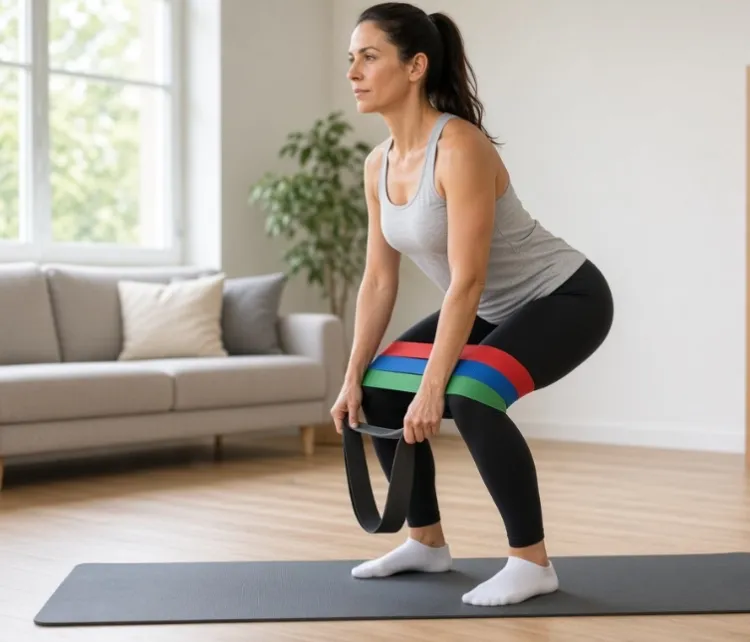
- Squats
- Lower-body training
- Full-body strength exercises
Their multiple width and resistance options make them suitable for progressive strength training.
Mini Loop Bands
Mini resistance bands are particularly useful for:
- Glute training
- Hip abduction
- Lower-body activation
- Leg exercises
- Warm-ups
They are compact and commonly available in multiple resistance levels.
Fabric Resistance Bands
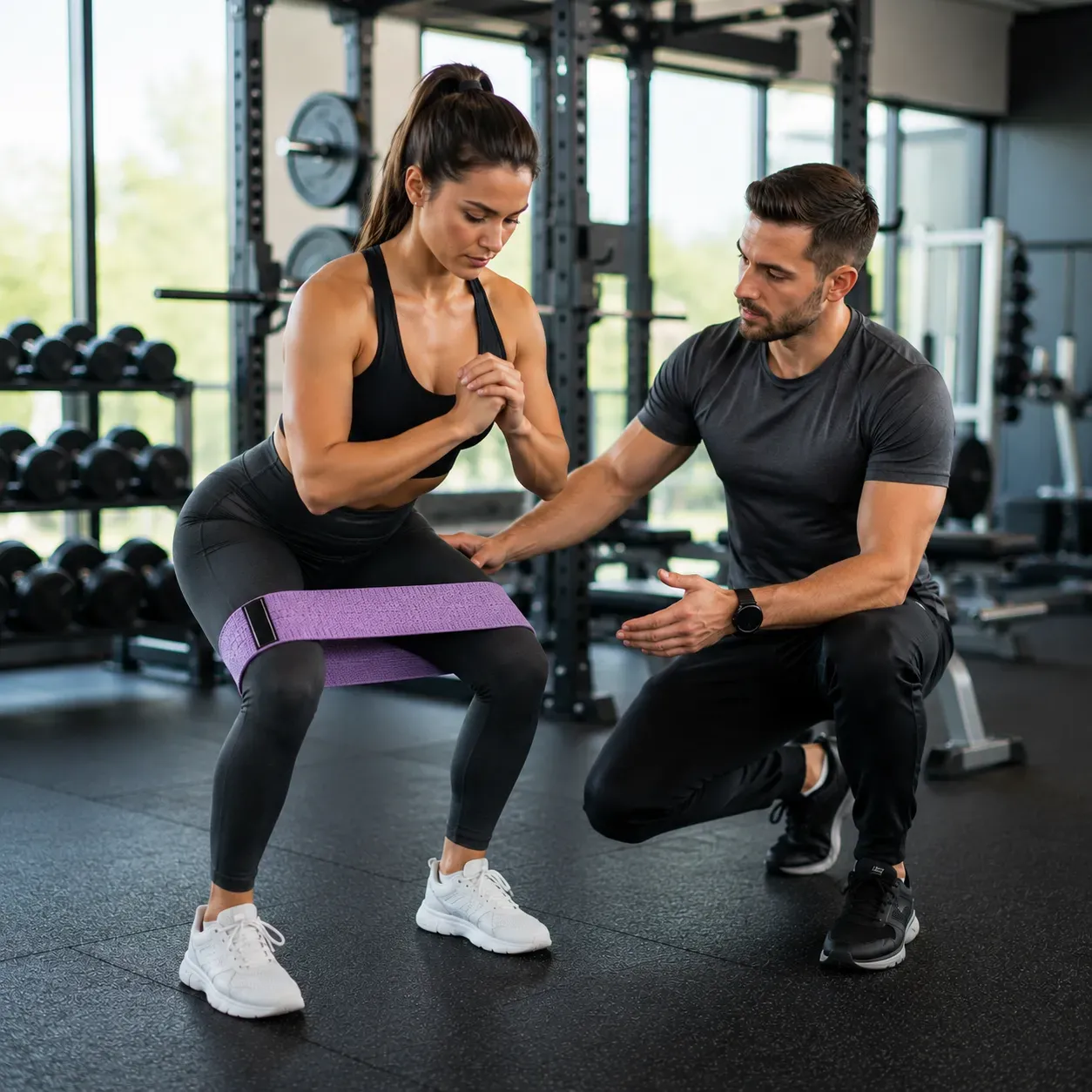
Fabric resistance bands, often called booty bands or hip bands, are designed primarily for lower-body exercises.
Their wider textile construction makes them particularly suitable for:
- Glutes
- Hips
- Thighs
- Lower-body strength and activation
Resistance Tubes With Handles
Resistance tubes are useful for movements similar to cable-machine exercises.
Common applications include:
- Biceps curls
- Triceps exercises
- Rows
- Chest presses
- Shoulder exercises
- Full-body home workouts
Handles, ankle straps, and door anchors can increase the number of available exercise configurations.
Are Heavy Resistance Bands Better for Building Muscle?
Not necessarily.
A heavier band creates more resistance, but more resistance is only useful if you can perform the exercise correctly.
A band that is too heavy may:
- Reduce range of motion
- Make technique difficult to control
- Shift tension away from the intended muscle
- Prevent completion of the planned repetitions
A band that is too light may not provide enough challenge.
The appropriate resistance allows the user to perform controlled repetitions while making the target muscles work hard.
How Many Reps Should You Do With Resistance Bands to Build Muscle?
There is no single repetition number that automatically produces muscle growth.
Both moderate and higher repetition ranges can challenge muscles when the resistance and effort level are appropriate.
For general resistance training, users might perform multiple controlled sets and select a resistance that makes the later repetitions challenging.
Instead of focusing only on the number of repetitions, ask:
Is the target muscle being challenged sufficiently by the end of the set?
If 15 repetitions feel extremely easy, increase the resistance or make the exercise more difficult.
Can Beginners Build Muscle With Resistance Bands?
Yes.
Resistance bands can be particularly suitable for beginners because resistance levels are easy to change and the equipment does not require a large home gym setup.
A beginner can start with lighter resistance to learn movement patterns and gradually progress to stronger bands.
For example:
Light → Medium → Heavy → Extra Heavy
This creates a simple progressive resistance system.
Can Advanced Lifters Build Muscle With Resistance Bands?
Yes, although there are some limitations.
Experienced lifters generally require greater resistance to continue challenging their muscles. Heavy power bands, combined bands, advanced exercise variations, and bands combined with free weights can provide substantial resistance.
However, for very heavy strength training, barbells and weight machines may make precise load progression easier.
Resistance bands can therefore be used as:
- Primary resistance equipment
- Supplemental resistance
- Warm-up equipment
- Accessory training
- Variable resistance added to free weights
Can You Build Muscle With Resistance Bands at Home?
Yes. This is one of their biggest practical advantages.
A basic home resistance training setup can include:
- Mini loop bands
- Long resistance bands
- Resistance tubes with handles
- Door anchor
- Ankle straps
With these products, users can train the chest, back, shoulders, arms, glutes, hips, and legs without requiring a large amount of space.
This makes resistance bands especially suitable for apartments, home gyms, travel, and portable fitness programs.
How Long Does It Take to Build Muscle With Resistance Bands?
There is no universal timeline.
Muscle development depends on factors including:
- Training experience
- Exercise selection
- Resistance level
- Training volume
- Training frequency
- Progressive overload
- Nutrition
- Protein intake
- Sleep
- Recovery
- Individual physiology
Beginners may notice strength improvements relatively early, while visible muscle development generally requires consistent training over a longer period.
Resistance bands are simply the resistance tool—the overall training program determines the result.
Are Natural Latex Resistance Bands Good for Strength Training?
Natural latex is widely used for resistance bands because it provides high elasticity and progressive resistance as the material stretches.
For strength training products, important performance characteristics include:
- Elasticity
- Resistance consistency
- Stretch recovery
- Tensile performance
- Dimensional consistency
- Surface quality
- Durability
The material alone does not determine band quality. Manufacturing process, product dimensions, resistance specifications, vulcanization, and quality control also influence performance.
How Resistance Band Quality Affects Training
Two bands that look similar may not necessarily perform the same way.
For fitness brands and professional buyers, important quality factors include:
Resistance Consistency
Bands within the same resistance level should provide reasonably consistent performance from batch to batch.
Elastic Recovery
A resistance band should recover appropriately after repeated stretching.
Thickness and Dimensions
Changes in thickness, width, and length can affect the resistance characteristics of the product.
Surface Quality
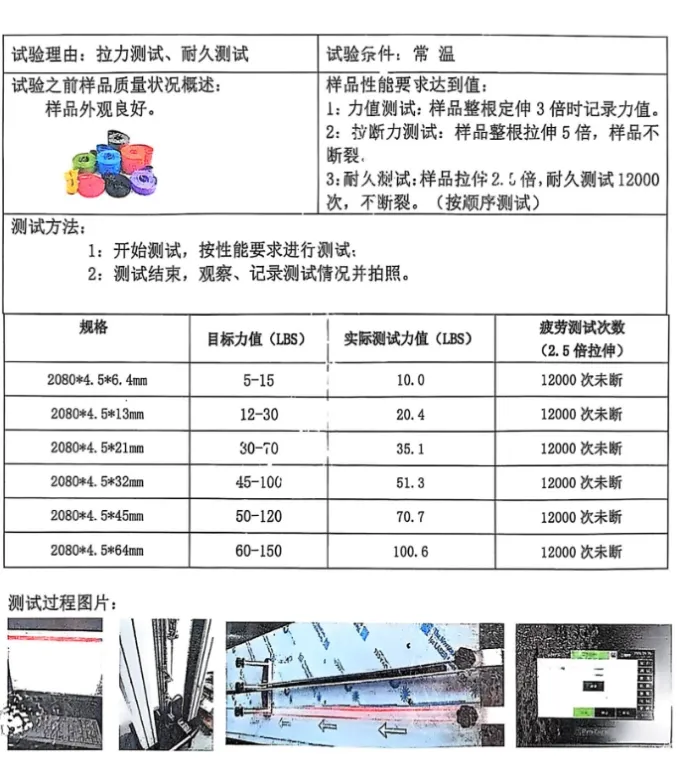
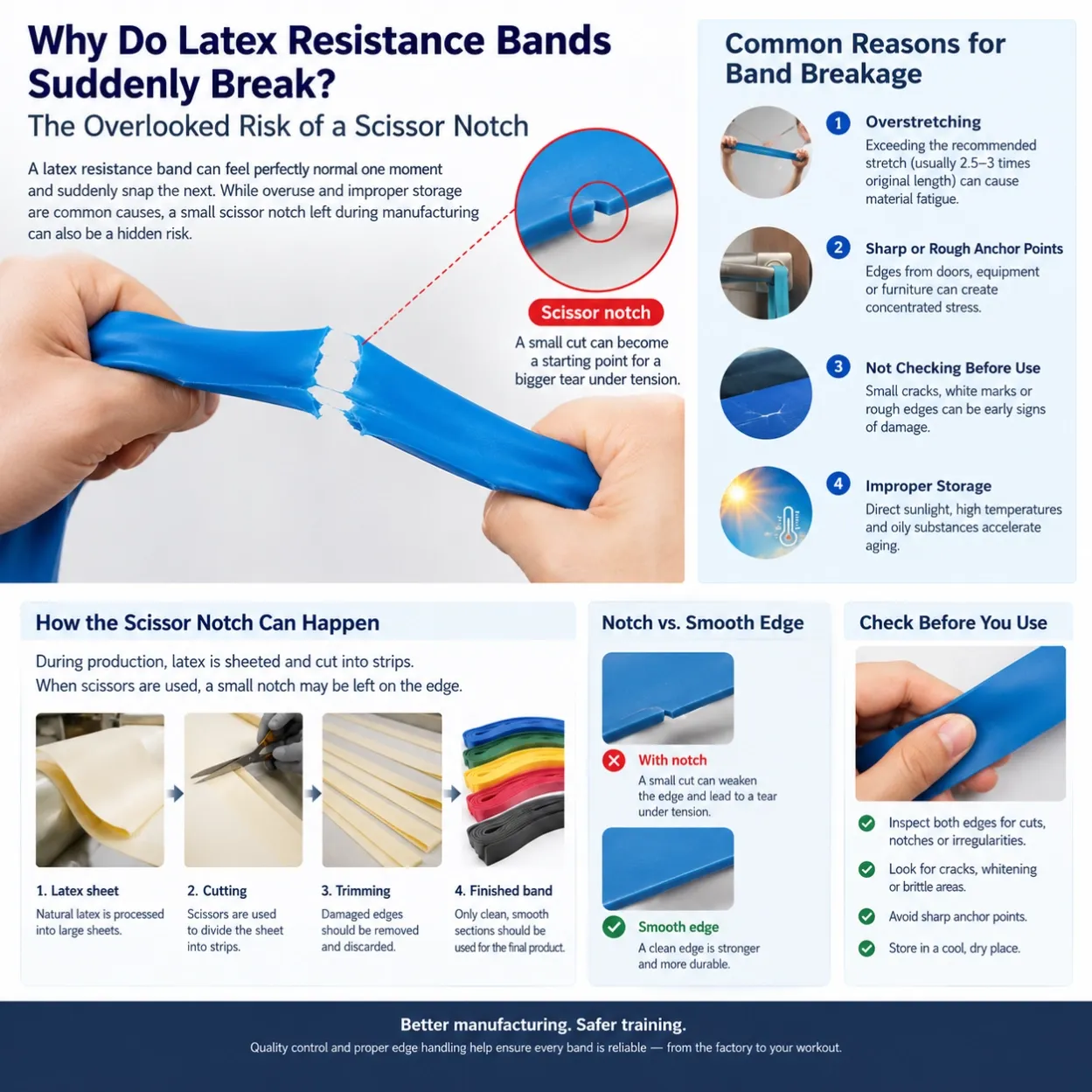
Cracks, cuts, irregular edges, or other defects can affect product durability.
Repeated-Use Performance
Repeated stretch testing can help manufacturers evaluate how a band performs over extended use.
These factors are particularly important for fitness brands purchasing resistance bands in bulk.
Resistance Bands for Muscle Building: Pros and Limitations
Resistance bands have several advantages for strength and muscle-building programs.
Advantages include:
- Progressive elastic resistance
- Multiple resistance levels
- Full-body exercise options
- Compact storage
- Easy transportation
- Suitable for home workouts
- Relatively simple resistance adjustment
- Can complement free weights
However, they also have limitations.
For very advanced strength athletes, achieving extremely heavy and precisely measured resistance can be easier with barbells or weight machines. Band tension also changes through the range of motion, so the resistance is not identical to lifting a fixed external weight.
Understanding these differences helps users choose the right tool rather than asking whether one form of resistance is universally better.
Frequently Asked Questions
Are resistance bands actually effective for building muscle?
Yes. Resistance bands can provide sufficient external resistance to stimulate muscle development when exercises are performed with appropriate resistance, training volume, effort, and progressive overload.
Are resistance bands as effective as weights?
Both resistance bands and weights can support strength and muscle development. They provide resistance differently: bands use elastic tension, while free weights primarily rely on gravity. The effectiveness of either depends largely on how the training program is structured.
Can you get a muscular physique using only resistance bands?
Resistance bands can train most major muscle groups and can support muscle development. Results depend on training intensity, progressive overload, consistency, nutrition, recovery, and individual factors.
Can resistance bands build glutes?
Yes. Mini loop and fabric resistance bands are commonly used to provide resistance during glute and hip exercises, including movements involving hip abduction and extension.
Can resistance bands build arms?
Yes. Resistance bands can provide external resistance for exercises targeting the biceps, triceps, shoulders, and forearms.
Should I use heavy or light resistance bands for muscle growth?
Use enough resistance to challenge the target muscles while maintaining controlled technique and an appropriate range of motion. As strength improves, resistance or exercise difficulty should progressively increase.
Can I use resistance bands every day?
Training frequency depends on exercise intensity, muscles trained, recovery, and the overall program. Muscles need adequate recovery after challenging resistance training, so harder training for the same muscle groups does not necessarily need to be performed every day.
Are resistance bands good for beginners?
Yes. Multiple resistance levels allow beginners to start with manageable resistance and gradually increase the training challenge as strength and technique improve.
Final Answer: How Effective Are Resistance Bands at Building Muscle?
Resistance bands can be an effective tool for building muscle.
They create external resistance through elastic tension and can be used to progressively challenge the chest, back, shoulders, arms, glutes, hips, and legs.
Their effectiveness depends less on whether the resistance comes from latex, dumbbells, or a weight machine and more on whether the training provides sufficient resistance, progressive overload, appropriate volume, good technique, consistency, nutrition, and recovery.
For beginners and home fitness users, resistance bands can serve as a primary strength-training tool. For advanced athletes, they can also complement free weights and machines as part of a broader resistance-training program.